Safety

The SPE Human Factors Technical Section has been officially renamed the SPE Safety Technical Section. The new name better reflects how safety is managed today across interconnected areas like human performance, risk management, and system resilience.

The company said its frequency of serious incidents was down at the end of the year from its levels at the end of 2024.
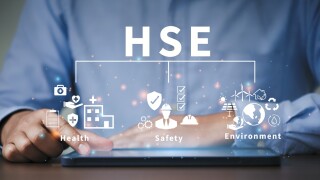
This paper examines how real-time monitoring can improve both incident prevention and emergency response in the oil and gas industry. Drawing from real-world examples and case studies, it provides practical strategies for implementing this technology effectively.
-
 Launched in May 2019 to deliver critical safety information to offshore oil and gas workers, the Bureau of Safety and Environmental Enforcement’s BSEE!Safe text notification service now has more than 5,300 subscribers.
 -
Shell has awarded consulting company Atkins with a 5-year framework agreement to provide general and specialist technical safety and human factors engineering services to support Shell’s global projects and assets.
-
OSHA requires construction and manufacturing businesses, among others, to complete and regularly update paperwork related to workplace safety. Do you know your company’s OSHA recordkeeping obligations?
-
The fatality rate for oil and gas workers is seven times higher than other industries, according to the Centers for Disease Control and Prevention.
-
Oil and gas wells produce nearly a trillion gallons of toxic waste a year. An investigation shows how it could be making workers sick and contaminating communities across America.
-
A partnership between academic researchers and two energy companies will build new evidence-based tools to enhance safety by examining whether simple exercises designed to increase mindfulness can reduce the risks.
-
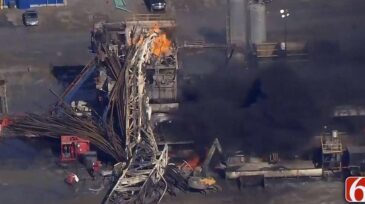
Two years ago, an oil well near a small Oklahoma town exploded into a fireball that swept through a drilling rig, killing five in an accident deemed a needless catastrophe by investigators and casting a short-lived spotlight on a lack of regulation and oversight across the oil and gas industry.
-
The Gulf Research Program of the National Academies of Sciences, Engineering, and Medicine announced the grant awards for eight projects focused on strengthening safety culture in the offshore oil and gas industry.
-
Safety analytics derived from virtual-reality data can quantify workers’ ability to sense physical hazards and be used to achieve a safer workplace and generative safety culture.
-
The nonprofit group Oceans Beyond Piracy says the cost of maritime piracy in West Africa was more than $800 million in 2017.