Safety

Shell has demonstrated drone-in-a-box operations from its Mars floating production unit, becoming the first operator in the region to secure FAA approval for self-approved offshore beyond-visual-line-of-sight flights. JPT Senior Technology Editor Jennifer Pallanich visited Shell Technology Center Houston to see the system in action.

SPE’s newly renamed Safety Technical Section expands the reach of human factors by integrating safety, risk management, and system resilience expertise while preserving dedicated leadership and technical focus.

As drilling operations become increasingly digital, computer vision is emerging as a continuous safety layer that complements, not replaces, established safety practices. The challenge is no longer whether artificial intelligence can detect hazards, but how operators should deploy, integrate, and govern these systems to improve safety without adding operational comple…
-
 The oil and gas industry has picked up on the benefits of digitization and artificial intelligence in its day-to-day activities, and the health, safety, and environment sector is no exception. While AI brings clear benefits, the risks that come with those benefits remain unclear.
 -
The coronavirus crisis had a devastating effect on oil-company revenues, but it has posed a tough human-resources problem too: how to keep workers safe on cramped rigs at sea where social-distancing is impossible. Many operators have found an answer in technology—specifically, digital twins.
-
Addressing engineering or mechanical controls alone without addressing the human behavior at the center of operations in the energy industry limits process safety efforts to decrease serious incidents and fatalities.
-
The Petroleum Safety Authority Norway is worried about a rising number of serious incidents in the industry and has asked the companies to prioritize work on safety.
-
In 2019, the oil and gas industry experienced 25 deaths, according to a new report released by the International Association of Oil and Gas Producers. This compares with 31 fatalities in 2018.
-
As the science has developed, accident-causation models have improved understanding of why accidents happen and how to reduce their likelihood. In more contemporary models, this approach also has been used to improve the understanding of why things go right and how to increase that likelihood.
-
The IOGP Safety Committee has conducted a multiyear strategic project to focus on fatality prevention, known as Project Safira, which addresses transportation safety, personal safety, and process safety. This paper presents data-analysis work conducted on process safety and the associated learnings.
-
The question is: Why do workers continue to get injured on the job despite federal standards interjecting?
-
A new initiative from the Society of Petroleum Engineers has grown from the “Getting to Zero” technical report released in 2018. SPE has teamed with CEDEP to launch the Safety Leadership Academy, a three-phase program designed to address obstacles to achieving zero harm.
-
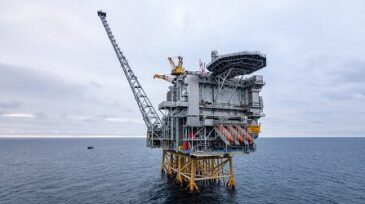
An analysis of existing wells in the Martin Linge field, conducted by Equinor when it took over as operator from Total, revealed that several did not have sufficient barriers, leading the company to plan new wells to ensure safe operation.