Safety

Shell has demonstrated drone-in-a-box operations from its Mars floating production unit, becoming the first operator in the region to secure FAA approval for self-approved offshore beyond-visual-line-of-sight flights. JPT Senior Technology Editor Jennifer Pallanich visited Shell Technology Center Houston to see the system in action.

SPE’s newly renamed Safety Technical Section expands the reach of human factors by integrating safety, risk management, and system resilience expertise while preserving dedicated leadership and technical focus.

As drilling operations become increasingly digital, computer vision is emerging as a continuous safety layer that complements, not replaces, established safety practices. The challenge is no longer whether artificial intelligence can detect hazards, but how operators should deploy, integrate, and govern these systems to improve safety without adding operational comple…
-
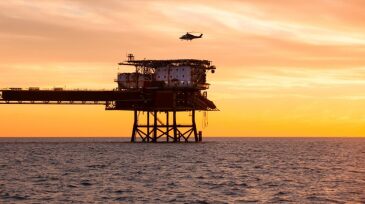
 Oil and Gas UK confirmed it is supporting the roll-out of a special protective face covering designed for workers traveling by helicopter to offshore installations in the UK continental shelf.
 -
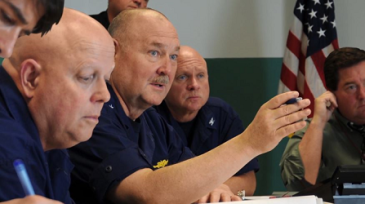
The video features some of the leaders who helped the nation respond to the event.
-
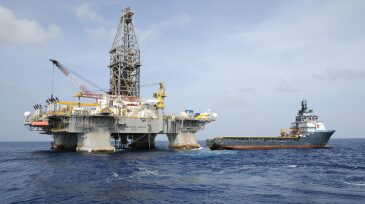
On 20 April 2010, a blowout on the Deepwater Horizon, drilling at the Macondo prospect in the Gulf of Mexico, killed 11 crew and caused a major oil spill. The accident and spill forever changed the industry.
-
Following the Deepwater Horizon incident in the Gulf of Mexico, the industry put in place comprehensive initiatives to improve offshore safety. This article outlines the status of two initiatives, a summary of the current focus areas to enhance safety, and SPE’s contribution to them.
-
The Colorado Oil and Gas Conservation Commission approved an $18.25 million fine against Kerr-McGee, a subsidiary of Anadarko Petroleum, which has now been acquired by Occidental Petroleum. The money will go to establish the Mark Martinez and Joey Irwin Memorial Public Projects Fund.
-
The bow tie concept of safety was on display at a recent live podcast presented by SPE, where representatives from Equinor, NOV, SOS International, and the Energy Institute discussed efforts to keep offshore workers safe during the current pandemic.
-
This paper presents a structured approach to human factors, focusing on the early identification of interactions between people and their working environment beginning from the conceptual and front-end engineering phases of capital projects.
-
An expert panel moderated by Johana Dunlop, SPE technical director for HSE and sustainability, covers a wide range of issues facing the double crisis of COVID-19 and historically low crude prices.
-
Industry representative body Oil and Gas UK and safety organization Step Change in Safety have coproduced a series of films to address the concerns of thousands of workers traveling offshore during the coronavirus pandemic.
-
The loss of the Alexander L. Kielland platform on 27 March 1980 marked a turning point on the Norwegian continental shelf, said Anne Myhrvold, director general of the Petroleum Safety Authority Norway. She said she believes it has been crucial for offshore safety work.