Safety

Shell has demonstrated drone-in-a-box operations from its Mars floating production unit, becoming the first operator in the region to secure FAA approval for self-approved offshore beyond-visual-line-of-sight flights. JPT Senior Technology Editor Jennifer Pallanich visited Shell Technology Center Houston to see the system in action.

SPE’s newly renamed Safety Technical Section expands the reach of human factors by integrating safety, risk management, and system resilience expertise while preserving dedicated leadership and technical focus.

As drilling operations become increasingly digital, computer vision is emerging as a continuous safety layer that complements, not replaces, established safety practices. The challenge is no longer whether artificial intelligence can detect hazards, but how operators should deploy, integrate, and govern these systems to improve safety without adding operational comple…
-
 For safety training, quality appears to be more important than quantity, according to a study conducted by Environmental Resources Management. The 2018 Global Safety Survey examined responses from 144 safety leaders from 120 corporations, approximately 20% of which were oil and gas companies.
 -
This paper argues for a new workplace safety and health 4.0 strategy that requires an adaptive and highly responsive approach to promote total worker health in the face of rapid technological advancements.
-
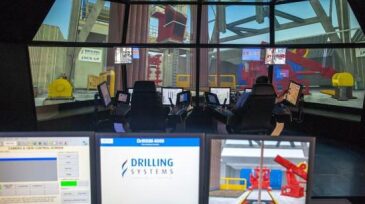
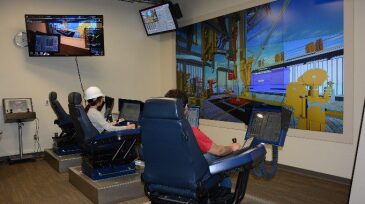
The Oil and Gas Institute at Robert Gordon University is working with Drilling Systems and its drilling, well-control, and lifting simulator technology to help oil and gas companies identify ways to improve efficiencies and raise safety standards.
-
Culture, not controls, will drive the next phase of industry safety evolution, said presenters at a recent HSE conference.
-
The guidance focuses on the business purpose of health services in the oil and gas sector and the additional value that effective leadership around health and human performance can bring.
-
Knowledge is at the risk of being lost in the oil and gas industry. Other industries have shown ways it can be retained by building mechanisms for knowledge retention into the safety management system.
-
For the first time, the University of Oklahoma has offered a Human Factors in Oil and Gas Operations class. The offered course fulfilled the mission of training petroleum engineering students to make an impact on oil and gas industry.
-
Following up the petroleum industry’s work with digital technology and security is a priority area at the Petroleum Safety Authority Norway. A key target for this supervision in 2019 will be helping the sector to improve safety and the working environment.
-
A report from Norway’s Auditor General criticizes several aspects of the way health, safety, and the environment in the Norwegian oil and gas industry is followed up by the Petroleum Safety Authority Norway.
-
A 3-year study that demonstrated how to capture a worker’s safety performance and translate the data into personal fatigue levels is the first step in creating a framework that can identify research-supported interventions that protect workers from injuries caused by being tired on the job.