Safety

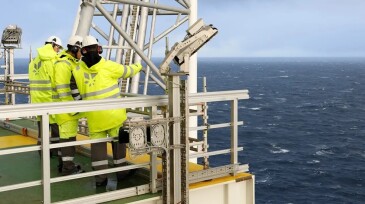
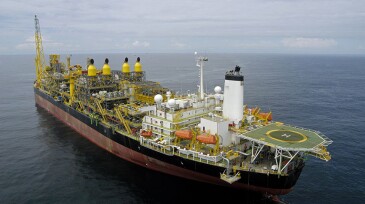
Shell has demonstrated drone-in-a-box operations from its Mars floating production unit, becoming the first operator in the region to secure FAA approval for self-approved offshore beyond-visual-line-of-sight flights. JPT Senior Technology Editor Jennifer Pallanich visited Shell Technology Center Houston to see the system in action.

SPE’s newly renamed Safety Technical Section expands the reach of human factors by integrating safety, risk management, and system resilience expertise while preserving dedicated leadership and technical focus.

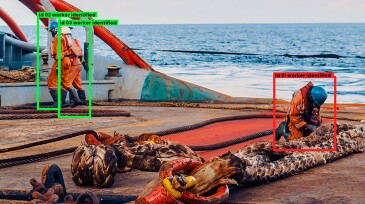
As drilling operations become increasingly digital, computer vision is emerging as a continuous safety layer that complements, not replaces, established safety practices. The challenge is no longer whether artificial intelligence can detect hazards, but how operators should deploy, integrate, and govern these systems to improve safety without adding operational comple…
-
 The new look at the plan involves considerations for national security.
 -
The technology, which uses Industrial Internet of Things components, aims to reduce the costs and improve the safety of drilling operations.
-
The year, marked by a fatal accident in February, finished with a decrease in accidents and spills.
-
From optimizing drilling performance to enhancing worker safety, computer vision can change how the industry works.
-
The update is designed to improve the accuracy and completeness of reported data, reduce the time needed to complete the form, and support deeper understanding of equipment failures.
-
This paper discusses and demonstrates the limitations of quantitative risk assessments (QRA) with respect to the usefulness of the concept in managing day-to-day and emerging risks as well as the effect of change. The paper goes on to discuss improved solution sets compared with pure reliance on QRA.
-
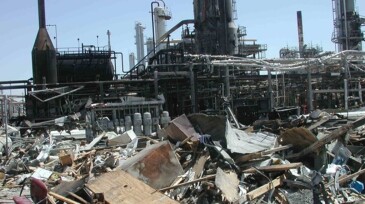
“Riskwashing” refers to a situation where an organization engages in superficial or insincere actions to create the appearance of addressing a particular risk or issue without actually taking substantive action to address the underlying problem. This paper presents methods to identify and minimize riskwashing as an organizational response to incidents.
-
This paper presents a method of geomechanical-risk screening and gives examples of its positive effect on the company’s safety standards through implementation of integrated solutions to prevent or mitigate the risks.
-
This paper presents the operator’s learnings in evaluating the routine of a floating production, storage, and offloading asset crew to identify scenarios for the application of robotics in day-to-day offshore activities.
-
This paper describes the development of guidelines to determine the most suitable corrosion-resistant alloys for downhole injection equipment in wells for carbon capture and storage and carbon capture, use, and storage.