Safety

Shell has demonstrated drone-in-a-box operations from its Mars floating production unit, becoming the first operator in the region to secure FAA approval for self-approved offshore beyond-visual-line-of-sight flights. JPT Senior Technology Editor Jennifer Pallanich visited Shell Technology Center Houston to see the system in action.

SPE’s newly renamed Safety Technical Section expands the reach of human factors by integrating safety, risk management, and system resilience expertise while preserving dedicated leadership and technical focus.

As drilling operations become increasingly digital, computer vision is emerging as a continuous safety layer that complements, not replaces, established safety practices. The challenge is no longer whether artificial intelligence can detect hazards, but how operators should deploy, integrate, and govern these systems to improve safety without adding operational comple…
-
 Hans Leo Hals, managing director for Trelleborg’s offshore operation based in Norway, met with leading oil and gas representatives in Mexico over a number of months to support improving the safety of Mexico’s offshore assets in the Gulf of Mexico.
 -
Safety has always been a top concern for oil and gas suppliers. Because pipelines must operate 24 hours a day and 365 days a year, safety, high availability, and reliability are key requirements for smooth operations and, ultimately, profitability.
-
A recent report by a group of scientists at the University of St. Gallen in Switzerland found that children born within 10 km of an oil spill were twice as likely to die in their first month.
-
Southwest Research Institute has developed a leak detection system to autonomously monitor pipelines for hazardous chemical spills. R&D Magazine recently recognized the system as one of the 100 most significant innovations of 2017.
-
According to the National Institute for Occupational Safety and Health, which recently released a report on 2014 oil and gas fatalities, 18% of the 101 deaths for the year were the result of roadway vehicle accidents.
-
Safety barriers need to be implemented in an integrated and consistent manner in order to minimize risk, and technical, organizational, and operational aspects of the barriers need to be considered.
-
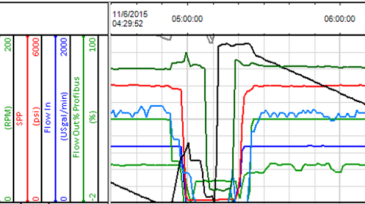
Exception-based monitoring of real-time data by remote operators can increase operational awareness of drilling crews, which can significantly minimize well-control risks by taking proactive and precise actions.
-
Some companies transporting certain petroleum-based products in British Columbia will have to comply with new spill preparedness and response requirements, after amendments made to the Environmental Management Act (EMA) came into force on 30 October.
-
A new study from Harvard identifies human capital metrics measured by global companies but determined many companies don’t disclose them on public reports.
-
Babies in Nigeria are at double the risk of dying before they reach a month old if mothers lived near the scene of an oil spill before conceiving, study shows.