Safety

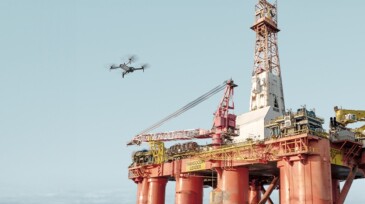
Shell has demonstrated drone-in-a-box operations from its Mars floating production unit, becoming the first operator in the region to secure FAA approval for self-approved offshore beyond-visual-line-of-sight flights. JPT Senior Technology Editor Jennifer Pallanich visited Shell Technology Center Houston to see the system in action.

SPE’s newly renamed Safety Technical Section expands the reach of human factors by integrating safety, risk management, and system resilience expertise while preserving dedicated leadership and technical focus.

As drilling operations become increasingly digital, computer vision is emerging as a continuous safety layer that complements, not replaces, established safety practices. The challenge is no longer whether artificial intelligence can detect hazards, but how operators should deploy, integrate, and govern these systems to improve safety without adding operational comple…
-
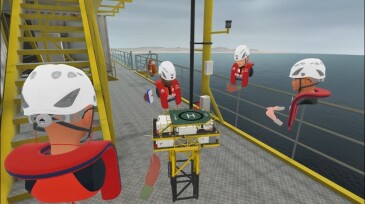
 VR provides an immersive and cost-effective approach to essential oilfield training.
 -
The Bureau of Safety and Environmental Enforcement (BSEE) recently conducted an inspection at the South Fork Wind project, the bureau’s first inspection of an operational offshore wind turbine in US waters.
-
A survey conducted by Unite the Union had 75% of respondents reply that they would never fly in an Airbus Super Puma helicopter amid safety concerns.
-
Using autonomous systems creates efficiencies, but, even more critically, it also allows engineers to be engineers.
-
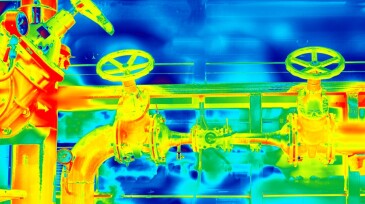
This article explores the implementation of artificial intelligence vision for leak monitoring automation in the oil and gas industry and its role in improving safety standards, operational efficiency, and environmental performance.
-
A string of high-potential fires in the Gulf of Mexico leads to inspections and recommendations to improve safety.
-
This study emphasizes the vital need to evaluate well conditions and working-fluid compatibility with coiled tubing materials to prolong coiled tubing operational life.
-
A recent study by researchers from the University of Strathclyde and published in Renewable and Sustainable Energy Reviews found injury rates for workers in offshore wind up to four time that of offshore oil and gas workers.
-
A spate of injuries caused by workers using hand tools improperly has prompted an alert from the Bureau of Safety and Environmental Enforcement.
-
For excellence to become a reality in any important area of operations, especially safety, there are five vital capacities organizations must develop, monitor, and synergize to adapt and thrive in a fast-paced and ever-changing world.