Safety

The SPE Human Factors Technical Section has been officially renamed the SPE Safety Technical Section. The new name better reflects how safety is managed today across interconnected areas like human performance, risk management, and system resilience.

The company said its frequency of serious incidents was down at the end of the year from its levels at the end of 2024.

This paper presents a novel application of artificial intelligence in computer vision for automating blowout-preventer pressure-chart-data extraction, demonstrating significant efficiency gains and a high return on investment.
-
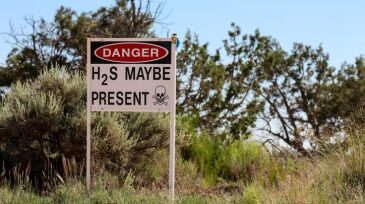
 Although improvements to drilling rigs have allowed drilling to depths greater than 20,000 ft, experience has shown that, the deeper the well, the higher the bottomhole pressure and more hydrogen sulfide gases the lease workers will experience.
 -
Although carpal tunnel syndrome is a strong driver of workers' compensation costs, lost wages, lost productivity, and disability, there is still a limited understanding of its frequency and causes in working populations.
-
Poor psychosocial working conditions increase the likelihood of various types of morbidity and may substantially limit quality of life and possibilities to remain in paid work.
-
The memorandum on integrated and unified risk management in the petroleum industry aims to help companies continue developing their own activities in this area.
-
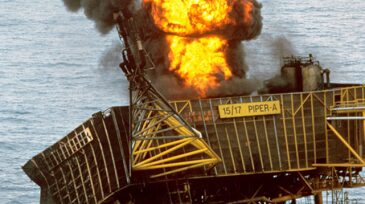
The major accident of 6 July 1988, when Britain’s Piper Alpha facility caught fire and exploded, remains one of the worst imaginable scenarios for everyone working in and with the petroleum industry. Its lessons are still relevant.
-
To better protect workers exposed to respirable crystalline silica, OSHA has issued two new standards: one for construction and another for general industry and maritime. OSHA will begin enforcing most provisions of the standard for general industry and maritime on 23 June.
-
Broadening training to include nontechnical skills can enhance safety and operational performance in a team environment, particularly when decisions crucial to preventing or mitigating a major incident must be taken against the background of an environment that is constantly changing.
-
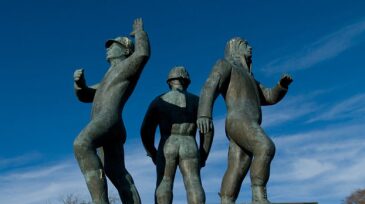
The Piper Alpha incident in the UK North Sea had a profound impact on the development of process safety culture and legislation around the world. With the great crew change already taking place, this column reflects on the disaster to ensure that its lessons are not forgotten.
-
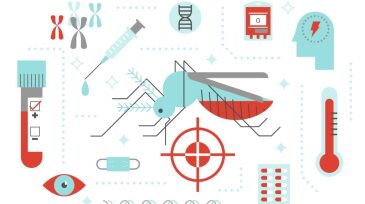
Malaria prevention is critical for multinational companies that operate in areas with a high risk of the disease. A global company has an established workplace malaria-control program that uses awareness, bite prevention, chemoprophylaxis, and early diagnosis to protect the health of workers.
-
The safety and predictability of offshore operations could be greatly improved by a new project that seeks to address the risks posed by human behaviors in the oil and gas industry.