Safety

The SPE Human Factors Technical Section has been officially renamed the SPE Safety Technical Section. The new name better reflects how safety is managed today across interconnected areas like human performance, risk management, and system resilience.

The company said its frequency of serious incidents was down at the end of the year from its levels at the end of 2024.

This paper presents a novel application of artificial intelligence in computer vision for automating blowout-preventer pressure-chart-data extraction, demonstrating significant efficiency gains and a high return on investment.
-
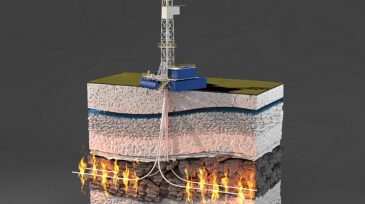
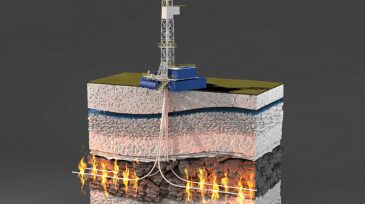
 A professor, whom the EPA charged with reviewing its 2016 study on hydraulic fracturing’s possible effects on drinking water, shared her observations on the process that led to the agency’s final conclusion.
 -
A team of researchers from the University of Houston is working with the oil industry to develop new ways to predict when an offshore drilling rig is at risk for a potentially catastrophic accident.
-
This paper outlines a 2-year project undertaken in a major UK continental shelf field to ensure that the safety-critical systems of five 35-year-old installations were all compliant with the relevant industry regulatory standards.
-
This paper aims to provide a fresh perspective on the pivotal role of integrity leadership and the needed to deliver the journey to goal zero, no harm and no leaks.
-
The principle objective of this research, initiated by the Petroleum Safety Authority, has been to improve the knowledge of safety-relevant indicators in the petroleum industry, in particular related to validity, effectiveness, and reliability.
-
Stanford geoscientists have found a way to detect thousands of tiny tremors around hydraulic fracturing operations that could serve as predictors of eventual larger earthquakes.
-
The Norwegian model for managing safety in the petroleum sector may seem complicated. The Petroleum Safety Authority has produced an educational guide to the safety regime.
-
The objective of this study was to estimate the economic burden of lung cancer and mesothelioma from occupational and paraoccupational asbestos exposure in Canada.
-
Stanford geoscientists have found a way to detect thousands of tiny tremors around hydraulic fracturing operations that could serve as predictors of eventual larger earthquakes.
-
More than a year ago, Ramanan Krishnamoorti and his team at the University of Houston started working on a predictive model that could alert oil and gas company employees when a problem might arise—and how to mitigate it.