Safety

The SPE Human Factors Technical Section has been officially renamed the SPE Safety Technical Section. The new name better reflects how safety is managed today across interconnected areas like human performance, risk management, and system resilience.

The company said its frequency of serious incidents was down at the end of the year from its levels at the end of 2024.
This paper examines how real-time monitoring can improve both incident prevention and emergency response in the oil and gas industry. Drawing from real-world examples and case studies, it provides practical strategies for implementing this technology effectively.
-
 Safety risks of drilling operations are widespread, with potentially significant consequences. Managing these safety risks is key, and intelligent safety risk software can help.
 -
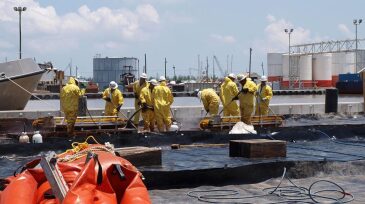
Workers who were likely exposed to dispersants while cleaning up the 2010 Deepwater Horizon oil spill experienced a range of health symptoms including cough and wheeze and skin and eye irritation, according to scientists at the National Institutes of Health (NIH).
-
The results of a virtual reality (VR) safety simulator and gaming experience presented by Lloyd’s Register at SPE Offshore Europe suggest that more needs to be done in training and understanding the daily risks of oil rig maintenance and operation.
-
Onshore and offshore production in Texas and the Gulf of Mexico continues to recover to pre-Hurricane Harvey levels as inspections and assessments of damages are done. Operators have not reported major damages resulting in extended shut-ins.
-
As of 4 September, BSEE has not received any damage reports from evacuated platforms or rigs in the path of Hurricane Harvey. A small number of facilities remain evacuated.
-
A consortium of organizations has set out to tackle one of the more enduring challenges in the North Sea: the nondestructive testing (NDT) of corroded pipes under insulation and engineered temporary pipe wraps.
-
There are downsides to a "hearts and minds" behavioral safety approach. The original "hearts and minds" program is instructional in this regard.
-
The author discusses various methods of modeling process safety.
-
Oil and gas production in the Gulf of Mexico have each gone up 10% since yesterday as Harvey continues to weaken and move northeast toward the Ohio Valley. Widespread flooding is expected to continue in Texas and toward the Louisiana border through the weekend.
-
As companies begin examining facilities in the wake of Hurricane Harvey, commercial drones have become a valuable asset in reaching flooded areas too dangerous for people to reach.