Safety

Shell has demonstrated drone-in-a-box operations from its Mars floating production unit, becoming the first operator in the region to secure FAA approval for self-approved offshore beyond-visual-line-of-sight flights. JPT Senior Technology Editor Jennifer Pallanich visited Shell Technology Center Houston to see the system in action.

SPE’s newly renamed Safety Technical Section expands the reach of human factors by integrating safety, risk management, and system resilience expertise while preserving dedicated leadership and technical focus.

As drilling operations become increasingly digital, computer vision is emerging as a continuous safety layer that complements, not replaces, established safety practices. The challenge is no longer whether artificial intelligence can detect hazards, but how operators should deploy, integrate, and govern these systems to improve safety without adding operational comple…
-
 With growing trade of liquefied natural gas (LNG), an increased diversification of LNG supply sources may occur in the LNG tanks as different compositions of LNG are stored in the tanks. It is the primary concern in terms of assuring stability and safety in LNG storage.
 -
This device lets workers in noisy and windy environments hear through their bones without removing ear protection.
-
A recently published study connects risky driving to long work hours, lengthy commutes, and insufficient sleep.
-
Ryan Sloan, safety manager for Birchcliff Energy, explains how two separate tragedies spur him on to change the way workers think.
-
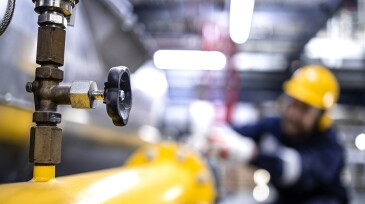
Enhanced solutions take detection of hazardous, toxic gas to the next level.
-
A panel discussion at Canada’s Safest Employers Awards centered on climate change as one of the top risk factors safety experts need to prepare for as they help guide their organizations into an uncertain future.
-
Data from Sphera’s latest Safety Report reveals a persistent gap between the intent and reality of process safety management, while environmental, social, and governance concerns are a growing consideration for process-safety management and operational-risk management professionals.
-
In this SPE Live, recorded at SPE’s Annual Technical Conference and Exhibition, HSES Technical Director Sue Staley talks with Norman Ritchie, director at vPSI Group, about the industry transitioning to learning before accidents occur.
-
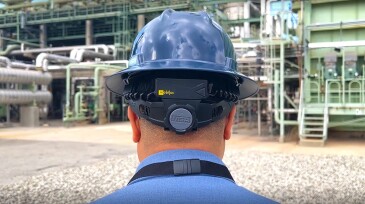
The device allows for increased worker safety by monitoring surroundings and connecting to managers in real time.
-
The project would evaluate oil and gas extraction workers’ sleep, fatigue, and other related factors, as well as their relationship to industry-associated risks.