Safety

Shell has demonstrated drone-in-a-box operations from its Mars floating production unit, becoming the first operator in the region to secure FAA approval for self-approved offshore beyond-visual-line-of-sight flights. JPT Senior Technology Editor Jennifer Pallanich visited Shell Technology Center Houston to see the system in action.

SPE’s newly renamed Safety Technical Section expands the reach of human factors by integrating safety, risk management, and system resilience expertise while preserving dedicated leadership and technical focus.

As drilling operations become increasingly digital, computer vision is emerging as a continuous safety layer that complements, not replaces, established safety practices. The challenge is no longer whether artificial intelligence can detect hazards, but how operators should deploy, integrate, and govern these systems to improve safety without adding operational comple…
-
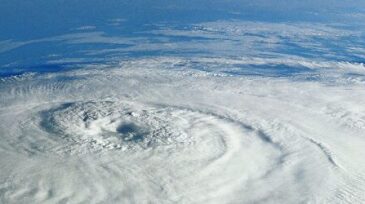
 About 16% of US offshore production in the Gulf of Mexico remains offline after Hurricane Laura caused mass evacuations more than a week ago.
 -
Lloyd’s Register has partnered with STC Global to create an artificial intelligence tool expected to provide insight from incident data captured by HSE functions but left untapped.
-
The oil and gas sector has always been inherently risky. No matter how far mitigating efforts go or by how much technology improves, it is unlikely that risk will be removed entirely anytime soon. That being said, the sector has made huge strides in recent years to better protect those who serve it.
-
While implemented with the best intentions, most HSE programs bring an element of administrative burden. In 2017, Dyno Nobel examined how to remove or modify programs to be less of a burden without increasing risk. Just like in Jenga, the blocks must be moved without destabilizing the structure.
-
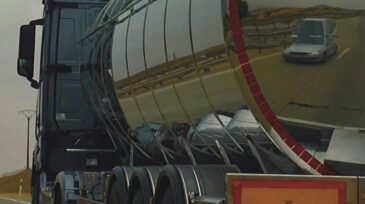
The International Association of Oil and Gas Producers has released three new reports in its series of land transportation recommended practices.
-
There has been an increased number of major accidents at industrial facilities globally as many have come back online post-lockdown.
-
Major oil and gas trade groups expressed confidence in their readiness for a busier-than-usual hurricane season in 2020, even with added logistical considerations stemming from the coronavirus pandemic.
-
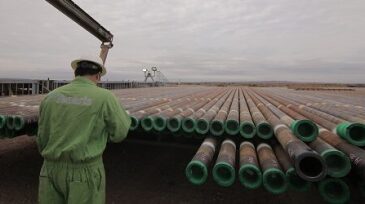
Shell’s health, safety, and environment team in Argentina, with support from Tenaris, created a new safety protocol during the down period that allowed the company to be the first operator to resume operations in May.
-
As companies begin to embrace the concepts of digitalization and big data, the main challenge remains: How do we make a step change in reducing human error in heavily paper-based operating and maintenance procedures?
-
Recent advances in data technology and machine learning have disrupted many businesses and processes and can lead to a new paradigm in workplace safety as well. This case study demonstrates the application of data science and predictive analytics to aid the health, safety, and environment function.