Safety

Shell has demonstrated drone-in-a-box operations from its Mars floating production unit, becoming the first operator in the region to secure FAA approval for self-approved offshore beyond-visual-line-of-sight flights. JPT Senior Technology Editor Jennifer Pallanich visited Shell Technology Center Houston to see the system in action.

SPE’s newly renamed Safety Technical Section expands the reach of human factors by integrating safety, risk management, and system resilience expertise while preserving dedicated leadership and technical focus.

As drilling operations become increasingly digital, computer vision is emerging as a continuous safety layer that complements, not replaces, established safety practices. The challenge is no longer whether artificial intelligence can detect hazards, but how operators should deploy, integrate, and govern these systems to improve safety without adding operational comple…
-
 Recommendations to reduce risks related to gas-release hazards were issued to the offshore oil and gas industry on 5 January. The Bureau of Safety and Environmental Enforcement released a Safety Alert highlighting the findings of its Gulf of Mexico-wide inspection effort.
 -
The paper describes a structured methodology for evaluation and visualization of technical integrity for oil and gas production and processing plants and explains how it is used to decide on technical conditions and assess risk and mitigating actions.
-
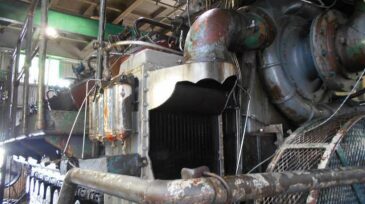
Two Gulf of Mexico incidents occurred that were related to compressors not being purged properly prior to startup. BSEE issued a Safety Alert outlining the circumstances and made recommendations for prevention.
-
A corrosive gas that is fatal to humans in high concentrations should not be a toxic substance under Canadian environmental law, say federal researchers in a new proposal.
-
One of the great challenges we face in leading a safety culture is how to communicate safety such that it has a lasting impact on employees.
-
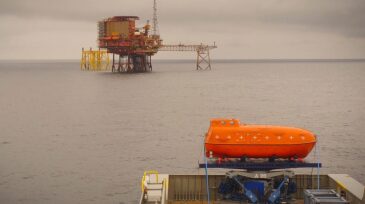
International Maritime Organization regulations state that lifeboat release and retrieval systems must be evaluated and replaced no later than 1 July 2019.
-
The Trump administration is considering easing offshore oil and gas safety regulations, including eliminating certain requirements for Arctic drilling , and cutting testing requirements for rules developed in response to BP's Deepwater Horizon disaster, an Interior Department document showed.
-
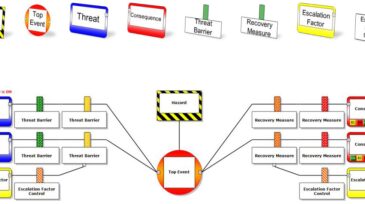
This paper describes an approach to standardizing proactive incident investigation to failed or impaired barriers and risk management.
-
One of the keys to growing a safety culture is to build levels of employee engagement. The reason for that is that the more engaged front-line employees are, the more ownership they assume for their work domain.
-
Between 2009 and 2016, SPE facilitated a series of global sessions to develop ideas for the future advancement of health, safety, and the environment in the industry. The result is the technical report “Getting to Zero and Beyond: The Path Forward.”