SPE News

SPE Journal is seeking submissions for a special issue on sustainable enhanced oil recovery (EOR), highlighting innovations that boost oil recovery while reducing CO2 emissions and environmental impact. The Call for Papers opens on 15 October 2026.

From scholarships and Distinguished Lecturers to SPE.org and technical resources, the SPE Foundation quietly shaped the member experience for nearly 50 years. This retrospective explores its legacy as its mission continues within SPEI.

The Acid Stimulation Technical Section aims to provide a global home for engineers, scientists, researchers, and practitioners working on acid stimulation in carbonate and sandstone reservoirs.
-
 It seems obvious that to manage the reduction of methane emissions an operator needs to measure the emissions, report them accurately, and then take action to mitigate them. But what might seem obvious gets tricky: Just what matters, and how can an operator efficiently and accurately measure those factors?
 -
With oil prices on the rise and calls for an energy transition growing louder, it's easy to get mixed signals about the future of the oil and gas business. SPE's TD for Production & Facilities Bob Pearson outlines the way forward for the discipline.
-
SPE’s 2021 Open Subsurface workshop tackled the ins and outs of open source, open data, and open access.
-
The awards will be presented at the Offshore Technology Conference in Houston in May.
-
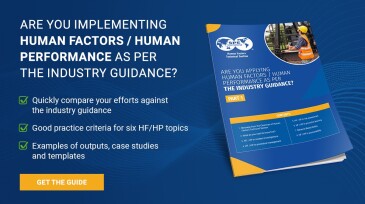
Human factors questions are now part of the contract prequalification service. This means that all companies wishing to bid for work in the oil and gas sector should demonstrate human factors policy and how they apply human factors in seven different areas. The SPE Human Factors Technical Section has created a guide to the process.
-
The perspectives gained from the Hydraulic Fracturing Technology Conference offer a glimpse of life after COVID-19, which looks better and different.
-
This section lists with regret SPE members who recently passed away.
-
Business, management, and leadership skills, also known as soft skills or nontechnical skills, can and should be developed early in one’s career, preferably before receiving a promotion to a leadership position. These case studies illustrate the advantages of using business simulations and dedicated learning programs to practice both nontechnical and technical skills …
-
Founder of the Flow Assurance Technical Section passed away 20 August 2021.
-
SPE Sections and Student Chapters which are achieving exceptional longevity milestones this year.