SPE News

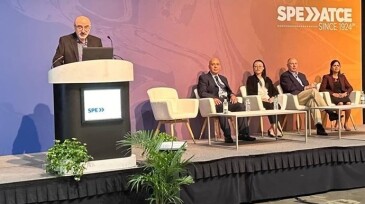
These awards recognize those members who have contributed exceptional service and leadership to the Society, as well as those who have made major professional contributions to their technical disciplines at the regional level.

Twelve young professionals in the energy industry will join the board.
This article from the SPE Artificial Lift Technical Section highlights a positive reality of our industry, one that centers on connecting and collaborating for success.
-
 Subject-matter experts from industry and academia advanced distributed fiber-optic sensing technologies and their implementation in flow measurement during a special session.
 -
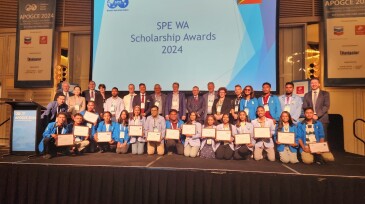
Eighteen Timorese students spent a week in Perth exploring and forging connections within the Australian oil and gas industry.
-
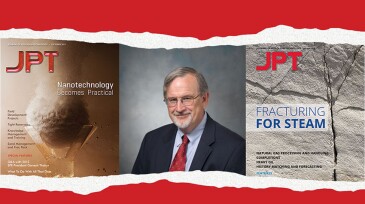
We reflect on the legacy and commitment made by a key member of the JPT team who is stepping down from his role of more than a decade and into retirement.
-
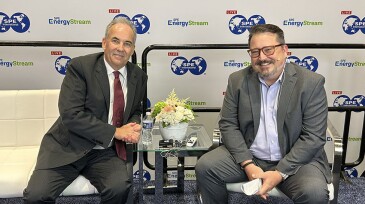
Olivier Houzé discusses his views on SPE finances, including a historical perspective, the effects of downturns and the COVID-19 pandemic, ongoing recovery, and future plans.
-
Our editorial team dove into the excitement of the Big Easy, capturing the buzz of this year’s conference with expert interviews and attending sessions to learn about the latest technical trends and insights to be featured in JPT’s exclusive content.
-
During my recent visit to Ukraine, I saw firsthand the resilience and strength of the country and its people. Despite the ongoing war, the energy sector and academic institutions continue to thrive, demonstrating unwavering dedication to progress and innovation.
-
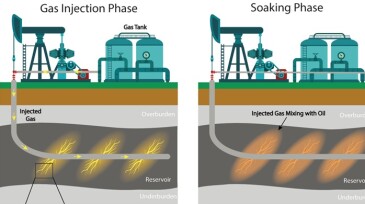
This paper presents a comprehensive literature review and critical examination of the published modeling and experimental studies regarding the recovery mechanisms of cyclic gas injection and the conditions under which the process can enhance oil recovery with the aim to identify lessons learned and areas in need of further study.
-
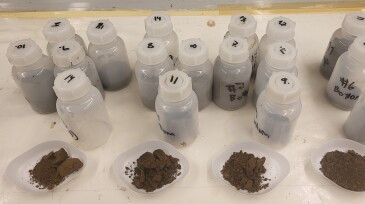
This case study investigates the reasoning behind the solidification of barite behind the casing with the aim of developing solutions for efficient casing removal and the potential use of settled barite as a barrier material.
-
A fundamental research study is conducted to confirm the potential usefulness of chelating agents in dispersing settled barite, emphasize the complex nature of the factors that control this process, and provide a solid basis for future studies aimed at optimizing dispersion methods in industrial applications.
-
The SPE Europe Energy GeoHackathon aims at educating and disseminating knowledge to all the participants on how data science applications can support geothermal energy developments and drive the energy transition. Boot camps begin 21 October.