SPE News

Operators struggle to understand proppant placement beyond the fracture, and that’s the information that could be the key to boosting EUR.

High-risk, high-reward projects focused on stimulation, enhanced recovery, and field-scale deployment are eligible under the DOE’s new UNLOCK initiative.

Nearly 4,500 energy professionals from 57 countries gathered in Houston for SPE’s Annual Technical Conference and Exhibition (ATCE), where more than 150 exhibitors and hundreds of technical papers highlighted the latest advances shaping the future of oil and gas.
-
 Computational fluid dynamics modeling is used to gain better understanding of filter-cake formation in inclined and vertical well drilling operations under elevated temperature and pressure, highlighting the importance of controlling fluid invasion to optimize drilling performance.
-
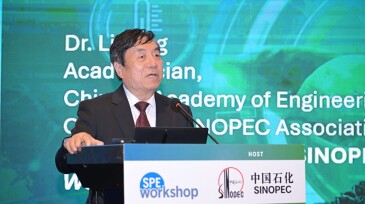
The inaugural SPE Workshop on CCUS Management in China was held in April in Qingdao. The workshop highlighted recent advances and technical challenges in CCUS management and attracted 104 attendees representing 19 organizations from eight countries.
-
Former SPE President Tom Blasingame began his term as head of Texas A&M's petroleum engineering department on 1 May.
-
Heightened focus on methane emissions management spurs a new conceptual framework to aid in determining the duration of detected methane emissions, data that may be useful to stakeholders responsible for measurement-informed emission protocols.
-
SPE President Terry Palisch is joined by Jennifer Miskimins, department head of petroleum engineering at the Colorado School of Mines, to discuss the academic aspect of petroleum engineering and its future.
-
The prestigious award celebrates OTC exhibitors who are revolutionizing the industry with their groundbreaking technologies. This year, 15 exceptional technologies—five of which hail from small businesses—were chosen for their advancements. Join us in recognizing these trailblazers who are shaping the future of offshore energy.
-
To meet the objective of balancing economic prosperity, energy security, and environmental protection, a natural gas gasification process within a downhole completion tool is proposed that converts methane wells into hydrogen production wells, while simultaneously capturing the process-generated carbon downhole and reinjecting the carbon dioxide into the surrounding g…
-
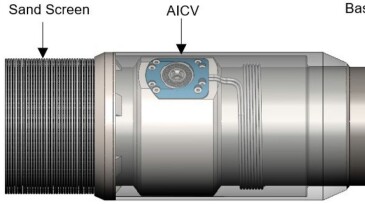
Oil production from thin-oil-rim fields can be a challenge considering early gas breakthrough and high gas/oil ratio. This study evaluates the performance of autonomous inflow control valves (in comparison with inflow control devices and sand screens) and their effectiveness in improved oil recovery in such fields.
-
The TWA Editorial Board is accepting nominations for “TWA Energy Influencers 2024: Young Professionals Who Energize Our Industry.” Nominate a YP by 1 June 2024.
-
SPE President Terry Palisch is joined by Paige McCown, SPE senior manager of communication and energy education, to discuss how members can improve the industry’s public image.