Offshore/subsea systems

Shell has demonstrated drone-in-a-box operations from its Mars floating production unit, becoming the first operator in the region to secure FAA approval for self-approved offshore beyond-visual-line-of-sight flights. JPT Senior Technology Editor Jennifer Pallanich visited Shell Technology Center Houston to see the system in action.

This paper explores the application of a modular, high-temperature gas-cooled nuclear reactor to a Very Large Crude Carrier-class floating production, storage, and offloading vessel.

This paper describes the potential of combined-cycle technology (use of a gas turbine and a steam turbine together to turn fuel into electricity) in offshore carbon-capture applications.
-
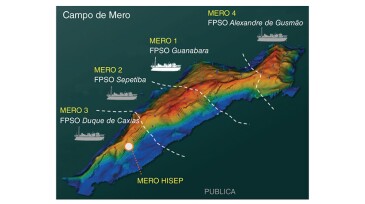
 The paper details subsea system development for the Mero field and how operation of Mero’s early production system influenced the final configuration for all Mero projects.
 -
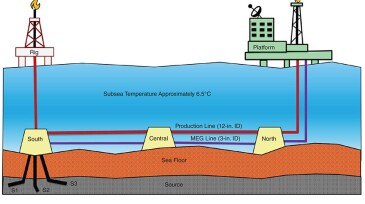
This work chronicles a series of operational activities in hydrate-blockage detection, modeling assessment, and safe and successful plug-remediation efforts in a Norwegian gas condensate subsea asset.
-
First oil is expected in 2029 from the development, which has a budget under $5 billion.
-
Phase 2 of the fast-track project expected to quadruple output to 60,000 BOPD by year-end.
-
The 12-well campaign is expected to accelerate global adoption of electric subsea technology and reduce emissions from subsea operations.
-
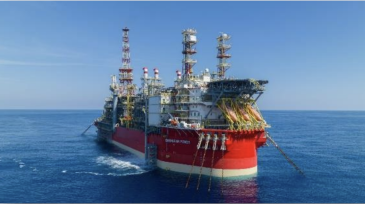
The tieback to the Energean Power FPSO is expected to deliver first gas in the first half of 2027.
-
First three wells of deepwater Gulf of Mexico project expected to jointly produce 22,000 BOE/D to the nearby host facility.
-
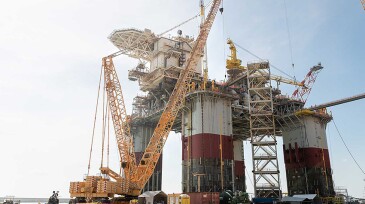
Chevron recently revealed new details about its first-of-a-kind deepwater development in the Gulf of Mexico. We’ve picked some of the most interesting to share with you here.
-
Contractor will conduct front-end engineering of a first-of-its-kind all-electric subsea production system.
-
The EPCI contract will see a new water-injection pipeline added to the complex.