Offshore/subsea systems

Shell has demonstrated drone-in-a-box operations from its Mars floating production unit, becoming the first operator in the region to secure FAA approval for self-approved offshore beyond-visual-line-of-sight flights. JPT Senior Technology Editor Jennifer Pallanich visited Shell Technology Center Houston to see the system in action.

This paper explores the application of a modular, high-temperature gas-cooled nuclear reactor to a Very Large Crude Carrier-class floating production, storage, and offloading vessel.

This paper describes the potential of combined-cycle technology (use of a gas turbine and a steam turbine together to turn fuel into electricity) in offshore carbon-capture applications.
-
 A new blowout preventer design shows potential for delivering much greater shearing power than current BOPs. The design is simpler and more efficient than current BOPs.
 -
As it has since 1969, the world came to OTC to make critical decisions, share ideas, and develop business partnerships to meet global energy demands.
-
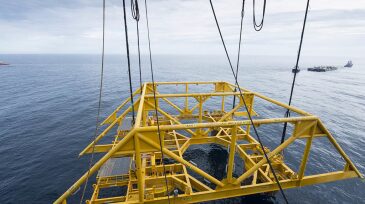
A closer look at the design and construction of Statoil’s subsea gas compression systems in the Åsgard and Gullfaks fields, the first of their kind in the oil and gas industry.
-
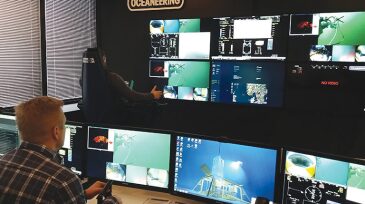
Operators for remotely operated vehicles will be getting more remote in the future as land-based control begins to become a reality.
-
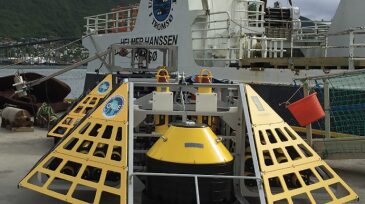
Anyone selling something new for offshore exploration and production has to be able to answer a simple question from customers, “How can we save some money?” For Norwegian oil companies, change is coming in many forms: steel, sensors, software, and standards.
-
The need to economically invest in offshore exploration and production has inspired a wide range of innovations in Norway to drastically reduce costs, which can lead to changes in offshore operations around the world.
-
A new method for accessing and cementing hard-to-reach spaces around complex offshore wells.
-
The BC-10 asset, located in deep water offshore Brazil, produces heavy oil in the range of 16 to 24 °API. In this article, two examples of production optimization for this field will be provided (further examples are available in the complete paper).
-
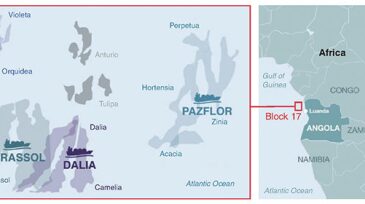
This paper describes the CLOV deepwater megaproject in Block 17 offshore Angola, which cost USD 8.4 billion to first oil.
-
Moving to higher-capacity wellhead systems for high-pressure and high-temperature (HP/HT) environments will require a larger mandrel and conductor-casing size.