Offshore/subsea systems

The Absheron gas field expansion will supply additional natural gas to Azerbaijan’s domestic market and support its export commitments to Turkey, allowing Baku to stay focused on meeting its gas export obligations to Europe.

This paper presents a flexible, highly cost- and energy-efficient method of gas separation and CO₂ capture from many different gas mixtures with a large range of CO₂ concentrations.

This work introduces a novel predictive methodology combining historical metocean data with real-time riser analysis for shallow water dynamically positioned rig operations.
-
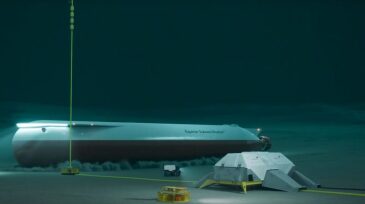
 A new idea from Equinor calls for autonomous submarines to transport CO2 from the surface to the seabed. The Norwegian operator says the shuttles could also carry oil and water for injection.
 -
WFS Technologies’ collaboration is its second in as many months supporting its Seatooth technologies.
-
While a year with less than 200 subsea tree awards seems uncommon, a year with less than 100 awards is an even rarer sight. It has only happened once before since the turn of the century, in 2016 following the oil price crash of 2014–2016.
-
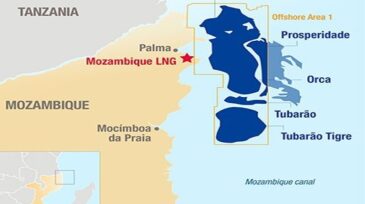
The W-Industries contract comes 2 months after Worley was awarded a master service agreement for services on the Mozambique LNG project.
-
Proposal requests were sent to companies to solicit partnerships for the project with ADNOC and ADPower.
-
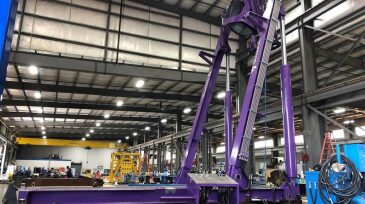
The A-frame is DNV certified. TechnipFMC’s ROVs will deploy in GoM later this year.
-
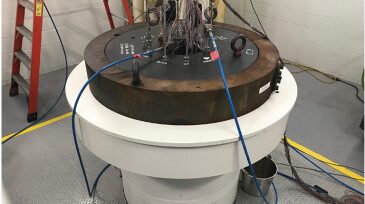
The complete paper presents a practical approach for validating design-verification analysis for subsea equipment, using a representative pressure valve block to correlate finite-element analysis (FEA) predictions for strain changes with actual measured changes.
-
This paper identifies potentially significant hidden value of subsea multiphase boosting technology, or aspects of it that have not received adequate attention during the field-development decision-making process.
-
The Dalmatian project is a brownfield development and represents the world’s longest multiphase tieback by boosting at some 35 km; the boosting system is installed at approximately 6,000 ft water depth.
-
The motto of the Olympic Games is “Citius, Altius, Fortius,” Latin for “faster, higher, stronger,” which emphasizes the concept of pushing the limits. As an engineer, that approach really speaks to me—and offshore installations, and especially offshore tiebacks, illustrate that concept very well.