Sustainability

DNV notes that energy and industrial process-related carbon emissions will have dropped by 2050 by only 44% from today’s level, not even halfway to the net-zero pledge envisioned by the Paris climate agreement.

SPE's new Asset Integrity Technical Section brings together industry experts to advance best practices in reliability engineering, asset integrity, risk reduction, and infrastructure performance. The global community will focus on the safe, reliable, and sustainable operation of energy assets across both traditional and emerging energy sectors.

SPE Journal is seeking submissions for a special issue on sustainable enhanced oil recovery (EOR), highlighting innovations that boost oil recovery while reducing CO2 emissions and environmental impact. The Call for Papers opens on 15 October 2026.
-
 SPE’s 2018 Annual Technical Conference and Exhibition ended with an earnest discussion about how best to communicate the industry’s efforts on sustainability with the public and other stakeholders.
-
Using semistructured interviews with key informants from Fort McMurray, Alberta, this paper details how residents perceive fly-in/fly-out workers and what effects this new employment strategy may have on their community.
-
By examining two very different security-risk environments, this paper will illustrate how easily security-related human-rights risks can go unnoticed unless care is taken early in the risk-management process.
-
Pascual Berrone has spent the last 10 years studying the phenomenon of greenwashing—appearing to limit environmental impact without actually doing so—and determines that it causes more harm than good in terms of companies’ standing and their market value.
-
The Annual Technical Conference and Exhibition in Dallas will wrap up by welcoming in the 2019 SPE President.
-
Hess has earned a place on the Dow Jones Sustainability Index North America for the ninth consecutive year. The index recognizes public companies for outstanding performance across economic, environmental, and social factors.
-
Given companies’ track record in achieving great things, the question is not whether companies can be a force for good. The question is, why don’t all executives lead their companies to be a force for good?
-
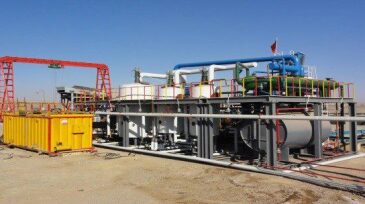
With the use of many advanced technologies, the Keshen gas field in western China was developed efficiently with no injuries and no pollution to the environment. It also significantly boosted local community development.
-
Three companies are collaborating to develop the equipment needed to make LNG a feasible alternative fuel for ship owners and operators.
-
Collaboration is critical to achieving recognition of the scope and value of carbon capture and storage and achieving acceptance for specific projects.