Sustainability

DNV notes that energy and industrial process-related carbon emissions will have dropped by 2050 by only 44% from today’s level, not even halfway to the net-zero pledge envisioned by the Paris climate agreement.

SPE's new Asset Integrity Technical Section brings together industry experts to advance best practices in reliability engineering, asset integrity, risk reduction, and infrastructure performance. The global community will focus on the safe, reliable, and sustainable operation of energy assets across both traditional and emerging energy sectors.

SPE Journal is seeking submissions for a special issue on sustainable enhanced oil recovery (EOR), highlighting innovations that boost oil recovery while reducing CO2 emissions and environmental impact. The Call for Papers opens on 15 October 2026.
-
 The Research Partnership to Secure Energy for America (RPSEA) has released its Technology Roadmap, a plan that outlines the challenges and research needs of the US onshore and offshore oil and gas industry for the coming decade.
-
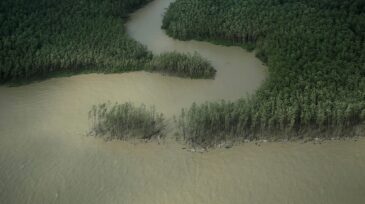
Oiapoque, surrounded by mangroves and close to a recently discovered 600-mile reef, is divided over what BP and Total might bring and what they might destroy.
-
Bowing to pressure from shareholders and the Paris international climate accord, Royal Dutch Shell pledged on 28 November to increase its investment in renewable fuels and to cut its carbon emissions in half by 2050.
-
At the 2013 G8 leaders’ summit in Northern Ireland, Canada announced that it would take action to enhance the transparency of payments to governments made by Canadian extractive companies by introducing mandatory reporting. The resulting legislation came into force on 1 June 2015.
-
Ceres, a sustainability nonprofit organization, issued a report on 14 September titled "Lead From the Top: Building Sustainability Competence on Corporate Boards." The report posits that company boards must be sustainability-competent in order to achieve long-term financial performance goals.
-
The Extractive Industries Transparency Initiative has little impact on the US domestic oil and gas industry but has been transformative in some parts of the world. So why did the US pull out?
-
Secrecy lies at the heart of invention and capitalism to reward innovators with exclusive rights to their creations. But that secrecy can also come at a cost. With drilling and fracturig, the ingredients and chemicals used to obtain oil and gas are legally allowed to be kept confidential.
-
Fernando L. Benalcazar, a senior adviser with APD Proyectos in Ecuador, launched the first Distinguished Lecturer tour in the US presented by a Sustainable Development Technical Section board member.
-
The chair of SPE’s Climate-Change Task Force provides an overview of the process by which it developed the society’s strategy to address the emission goals of the Paris Agreement on Climate Change.
-
Hess Corporation has been recognized for climate change stewardship, achieving leadership status in CDP’s 2017 Global Climate Analysis.