Unconventional/complex reservoirs

Disposal wells remain the lowest-cost solution for produced water, but concerns over seismicity and long-term sustainability are accelerating interest in alternatives.

This work applies fuzzy logic, a well-established artificial-intelligence technique, to quantitatively assess connectivity between injectors and producers in a giant presalt field in the Santos Basin of Brazil.

With a strong presence across US shale in the Bakken, Anadarko Basin, Powder River Basin, and the Permian, Continental Resources is expanding into Argentina’s Vaca Muerta shale as the privately held E&P giant pursues international growth.
-
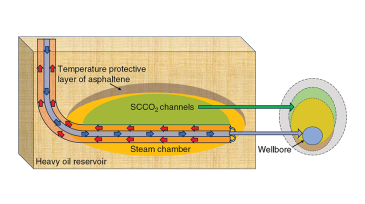
 This paper presents a comprehensive model of geothermal exploitation for depleted deep heavy oil reservoirs through supercritical CO₂ injection.
 -
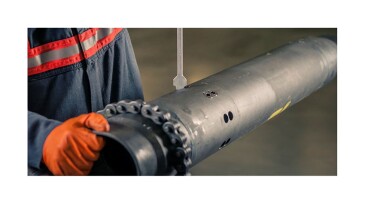
This paper discusses the development of a multientry, multistage fracturing system and its advantages over traditional openhole multistage fracturing solutions.
-
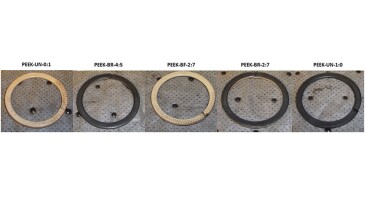
The authors of this paper describe a study in which performance optimization was demonstrated in thermoplastic sealing systems for oil and gas equipment using 3D printing to manufacture multicomponent composite structures.
-
The Midland, Texas-based operator said the deal hands it the biggest remaining target in the Midland Basin side of the Permian Basin.
-
Industry leaders champion collaborative solutions as essential for overcoming fracturing limitations.
-
Three graduate students have received the 2025 SPE Hydraulic Fracturing Technology Conference and Exhibition Outstanding Graduate Student Award.
-
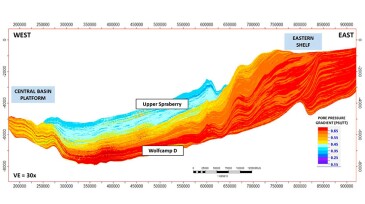
Regional pore-pressure variations in the Leonardian- and Wolfcampian-age producing strata in the Midland and Delaware basins are studied using a variety of subsurface data.
-
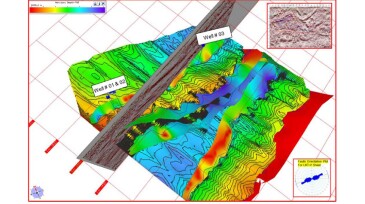
The main goal of this research work was to determine subseismic faults and fracture corridors and their characteristics, including density and orientation, for a Paleocene fractured carbonate reservoir.
-
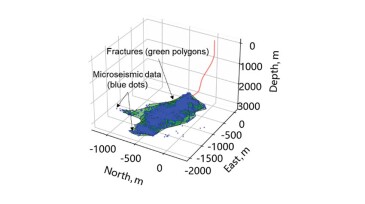
In this paper, an energy-based 3D fracture-reconstruction method is proposed to derive the complex fracture network from microseismic data in a shale gas reservoir.
-
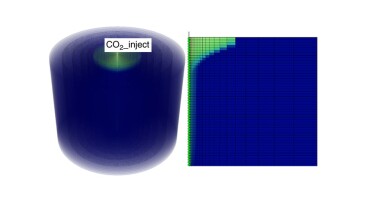
The study uses laboratory and digital core analyses of Berea sandstone to estimate petrophysical and dynamic properties for adjustment of predicted precipitation and flow reduction in reservoir simulation models of intermittent CO₂ injection with aquifer drive.