Unconventional/complex reservoirs

The deal adds over 1,000 potential drilling locations and almost doubles oil production for Houston-based Magnolia.

Average output reached 13.6 million BOPD, extending a period of sustained growth that has kept the US at the forefront of global oil production.

The events will be co-located 3–5 May 2027 at Reliant Park in Houston, Texas.
-
 Operators share emissions-mitigation research insights amid calls to accelerate to meet 2030 goals.
 -
Part 3 of this series looks at the importance of performance analysis and how to generate the economic benefit for solving conformance or sweep efficiency problems. The economic elements of this review are very basic, but they will help you to determine a more-accurate understanding of the true economic benefit.
-
SponsoredQuickly identifing the right strategies for a well or pad can overcome operational challenges. These cost-effective and easy-to-use solutions help operators achieve improved production rates with less manpower.
-
The US onshore business is looking flat at the moment, though these sorts of predictions are prone to sudden shifts.
-
Dos Caminos joint venture additions will be capable of delivering 2.0 Bcf/D of natural gas.
-
Private-equity producer adds over 160,000 acres in Wyoming’s Powder River Basin oil play.
-
As the demand for energy continues to increase, so does the sociopolitical demand that these resources be produced in a sustainable way. This reflective thought has defined this month’s selection of technical papers, each speaking to a different facet of this feature’s theme: unconventional reservoir development for a sustainable energy transition.
-
This paper describes natural fractures and their effect on hydrocarbon productivity in the Vaca Muerta shale formation.
-
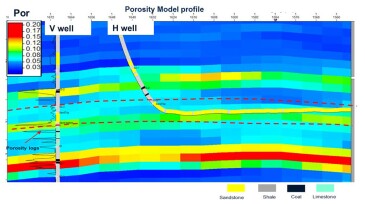
The authors of this paper describe a solution using machine-learning techniques to predict sandstone distribution and, to some extent, automate the process of optimizing well placement.
-
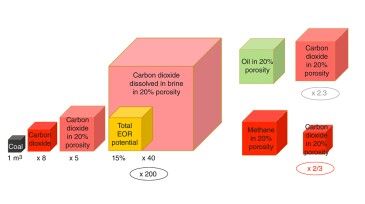
This study catalogs global gas/oil ratio data to identify currently produced light crude oils that could be rendered carbon neutral through the direct-air-capture mechanism.