Unconventional/complex reservoirs

The $100-billion project is widely considered the largest unconventional development outside of the US and is noted by Aramco as the largest nonassociated gas development in the kingdom.

This paper presents a study of trapped-torque incidents during drillpipe connection, highlighting contributing factors and root causes and proposing prevention and mitigation measures for these transient events.

In this study, a method was developed to analyze the effects of drilling through transitions on bit-cutting structures and construct an ideal drilling strategy using a detailed drilling model.
-
 The paper presents results of single-phase and multiphase electrical-submersible-pump tests as well as operation data, lessons learned, and failure examples gathered over 10 years of operation in a highly viscous offshore oilfield.
 -
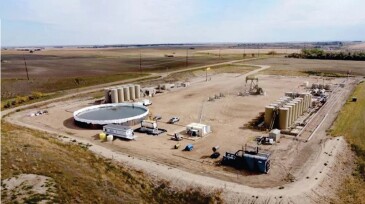
Injecting gas plus water proved more effective and less costly than gas-only injection in the Bakken.
-
Digital systems are helping ensure US independent Diversified Energy continues to grow and optimize production from its mature assets.
-
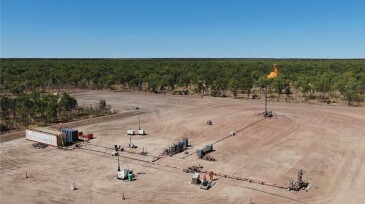
The Sydney-based company announced it will also seek to exit all of its upstream permits with the exception of its major LNG joint venture.
-
ADNOC awarded a new round of contracts to international service companies, intending to apply directional drilling and LWD to boost production by getting a better assessment of its reservoirs.
-
When Occidental Resources switched to bigger fracture designs to produce more oil, it produced more water as well. Based on research done since, they cannot have one without the other, and at the oil prices recently seen, that’s OK.
-
The authors of this paper use a pattern-review technique in a complex brownfield as a tool to understand reservoir connectivity and dynamic fluid movements across the field.
-
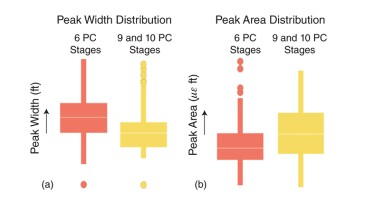
The authors of this paper describe a fiber-optic diagnostic method based on Rayleigh frequency shift that provides new insights about the characteristics of the near-wellbore region during production.
-
Glynn Williams, CEO of Silixa, offers his take on the role fiber-optic technology will play in the rise of CO2 storage and on the firm’s progress in the tight-rock sector.
-
The authors of this paper describe a project that integrates carbonate stratigraphic forward models of outcropping formations and reservoir-modeling work flows.