Unconventional/complex reservoirs

This paper aims to establish a set of best practices for generating particle-size-distribution data from core samples.

This paper discusses the successful execution of two openhole gravel-pack completions in two Gulf of Mexico fields with depleted reservoirs.

By integrating experimental and mathematical modeling approaches, this work aims to advance the understanding of sand-detachment dynamics and formation instability under varying saturation conditions.
-
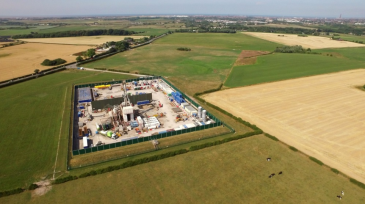
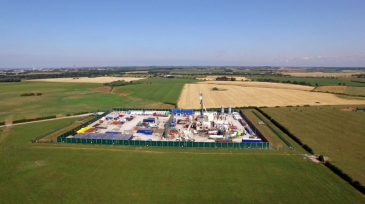
 Cuadrilla has encountered its first bumps in the road while fracturing its Preston New Road shale gas well, with two quakes already temporarily halting injection operations.
 -
Cuadrilla Resources will test the two wells over the next 6 months to determine how much gas it can initially recover from the Bowland Shale.
-
This paper presents a new approach for more-accurate modeling of liquid blockage in tight oil and gas reservoirs and investigates the use of solvents for blockage removal.
-
This paper evaluates the ability of different groups of surfactants to improve oil recovery in unconventional liquid reservoirs (ULRs) by experimentally simulating the fracture treatment to represent surfactant imbibition in a ULR core fracture during a soaking flowback.
-
In this paper, the authors consider the development plan of shale gas or tight oil with multiple multistage fractured laterals in a large square drainage area that they call a “section” (usually 640 acres in the US).
-
Technology has been key to success in exploiting unconventional resources. In recognition of the current significant interest in this field, the upcoming issue of an SPE technical journal will feature peer-reviewed papers on the rapidly evolving suite of technologies for unconventional resources.
-
A marked change from a decade ago, Appalachia, the Permian, and the Haynesville now represent almost half of total US gas production, EIA reports.
-
BP ends a year of speculation as to who will buy BHP Billiton’s much-coveted US unconventional business, transforming its Lower 48 portfolio in the process.
-
Today’s advancements in unconventional technology are worth marveling over, but there is still plenty of room for growth.
-
This paper presents a literature review to determine the engineering challenges and opportunities presented by CBM production in China.