Water management

The startup company’s Midland Basin demonstration plant, located in the Permian Basin, takes a major step toward commercialization by proving its direct lithium extraction technology can refine battery-grade lithium carbonate from produced water under multiple 24/7 production cycles.
This paper presents an approach to the identification, selection, and implementation of initiatives for sustainable water management, withdrawal reduction, and water valorization.

Disposal wells remain the lowest-cost solution for produced water, but concerns over seismicity and long-term sustainability are accelerating interest in alternatives.
-
 The last growing market of US land services, water disposal, is set for an all-time high in the Permian.
 -
The complete paper focuses on sources of produced water from conventional and unconventional onshore oil and gas operations and addresses the challenges and opportunities associated with reusing the produced water.
-
A global trend has developed toward the application of risk-based assessment (RBA) techniques for managing environmental risks and considering potential effects of produced-water (PW) discharge.
-
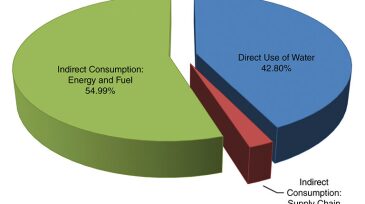
Sustainable water management should encompass current management of water resources as well as its potential effect on the future. Sustainable water management in oil and gas is a journey that will need approaches from many perspectives.
-
The complete paper discusses the steps taken by Repsol in Peru in accordance with its environmental strategy to become certified for the Blue Certificate granted by ANA to companies that efficiently manage water in their operations and manage shared-value projects with their stakeholders.
-
Operators of unconventional plays face a conundrum—how to dispose of produced water economically without risking seismicity or aquifer contamination. A recent paper and virtual forum offer ideas for optimizing saltwater disposal.
-
The Eddy State Complex adds 300,000 B/D of recycled produced-water treatment capacity in the northern Delaware Basin. The company said it is on track to recycle 25 million bbl of produced water this year.
-
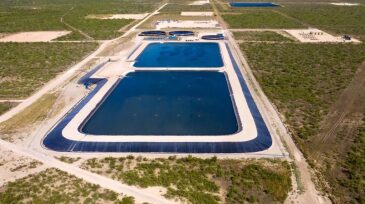
Breakwater’s produced-water-recycling facility has the flexibility to recycle, store, or dispose of water. It has already recycled nearly 5 million bbl of produced water in the third quarter of 2020.
-
The state of New Mexico finalized changes to its produced-water regulations on the oil and gas industry after months of adjustments and debate between state regulators, environmentalists, and oil and gas industry leaders.
-
Advanced machine-learning methods combined with aspects of game theory are helping operators understand the drivers of water production and improve forecasting and economics in unconventional basins.