Well intervention

Panelists at the SPE Subsea Well Intervention Symposium discussed where AI is delivering value today, where risks remain, and how engineers can best determine its usefulness.

With millions of wells having been drilled in the US since the beginning of the oil age, the land is pocked with old, unused wellbores. For most, repurposing is a pipe dream. Plugging is the best option.

This article from the SPE Research and Development Technical Section offers new insights to how the upstream industry can benefit from the emergence of quantum computing.
-
 The operator developed a solution that has kept the well at stable production for over a year after treatment.
 -
SponsoredUnwanted water production can erode well performance and asset economics if left unmanaged. Interwell’s precision water shutoff approach, grounded in diagnostics and engineered isolation, helps operators identify water-entry points, protect hydrocarbon flow, and restore sustainable well performance in mature and complex wells.
-
This paper provides an account of the design, implementation, and operational insights from an enhanced geothermal system proppant stimulation targeting a volcanic, dry rock setting with an approximately 330°C bottomhole temperature.
-
This paper presents a robust workflow to identify optimization opportunities in gas lift wells through real-time data analysis and a surveillance-by-exception methodology.
-
This paper introduces an agentic artificial-intelligence framework designed for offshore production surveillance and intervention.
-
The objective of this study is to field test a non-nuclear multiphase flowmeter and assess its performance under challenging operating conditions.
-
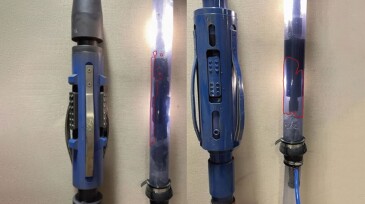
A new tubing-conveyed tool combines wellbore cleanout with multi-tracer deployment for production diagnostics and reservoir monitoring.
-
A collaboration between a large independent and a technology developer used low-cost interventions to optimize production from unconventional wells.
-
The experience captured in this paper illustrates the potential of deepwater riserless wireline subsea intervention capability and the fact that it can be expanded beyond hydraulic-only, simple mechanical, and plugging-and-abandonment scopes.
-
This paper describes the use of coiled tubing in a pilot project for carbon dioxide injection, enabling evaluation of the conversion of an existing oil field for CCS purposes and derisking storage-development uncertainties before having to cease hydrocarbon production.