

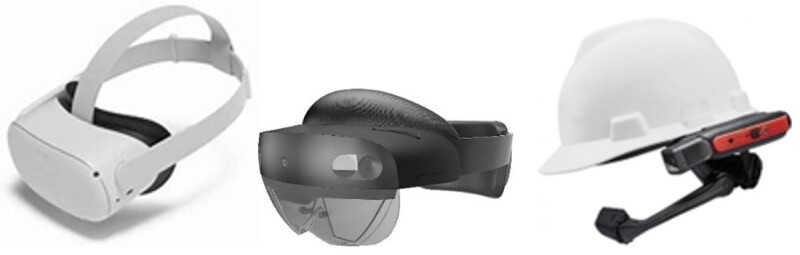
This paper presents four case studies—remote equipment surveys and troubleshooting, tubular thread inspection, field auditing, and rig site operations—to demonstrate how augmented reality (AR) technology can enable feasible solutions for remote support and collaboration in the oil and gas industry.
Leveraging AR and related remote technologies enhances operational efficiency, safety, and cost-effectiveness. The implementation of AR in harsh and remote environments, however, introduces unique challenges. Key obstacles, including environmental conditions, connectivity limitations, data security, ergonomic constraints, and user adoption barriers, are highlighted and addressed through various mitigation strategies.
For example, AR devices compliant with ruggedized and explosive atmospheres were deployed to withstand tough environmental conditions at drilling rigs. To manage connectivity issues in remote locations, private networks and encryption protocols were implemented to ensure secure, stable communication channels necessary for real-time support. Comprehensive user training programs were introduced to facilitate smooth adoption and to deliver practical benefits to users.
In addition to addressing these challenges, the effect of global deployment strategies and continuous technology development on maximizing the effectiveness of AR in the oil and gas industry is outlined. Significant operational improvements are indicated by the findings from these case studies, including a reduction in travel-related expenses and carbon emissions, enhanced accuracy in remote inspections, improved safety protocols, and decreased maintenance costs. These results underscore the transformative potential of AR when thoughtfully implemented with robust support systems, highlighting its ability to drive productivity and sustainability in oil and gas operations globally.
The paper finds that AR, paired with comprehensive challenge mitigation strategies, offers a valuable model for future applications across the industry. With continued advancements in wearable technology, remote support can further evolve to meet the industry’s demands for operational efficiency, safety, and environmental sustainability.