Testing page for app
-
 Borets named Obren Lekic as chief executive officer (CEO) of Borets US. Lekic has more than 20 years' experience in the oil and gas industry. He joined Borets in 2005, serving as the deputy general director for business development and marketing. He went on to serve as vice president of the eastern hemisphere for Borets International. Prior to taking on his current ro…
-
The CEO of Phillips 66 expects the DAPL to be operational in 2Q 2017.
-
Designers used algorithms to create 10,000 unique acoustic panels to line the ceiling, walls, and balustrades of Hamburg's Elbphilharmonie concert hall. The panels comprise 1 million little divots, ranging from 4 to 16 cm across, that shape sound within the auditorium.
-
The oil and gas industry has a lot to gain from the adoption of big data analytics as recently highlighted examples from major service company Halliburton demonstrate.
-
As drilling activity rises, the demand for all that is needed to complete wells rises even faster. The wells are bigger, and more water and sand are used for each foot stimulated.
-
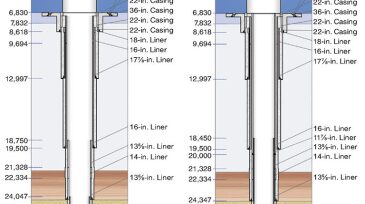
This paper focuses on cementing-design challenges and discusses the engineering techniques used to approach them.
-
Few locations present as many challenges for drilling as the Arctic. It is one of the most hostile environments in the world, with some of the most remote locations, the toughest logistics challenges, and the largest gaps in infrastructure on the planet.
-
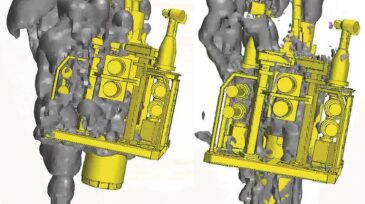
Developing a well-specific subsea-capping contingency plan involves assessing the feasibility of deploying a capping stack from a floating vessel, determining the weight and stability, and performing dynamic-flow simulations of closing the capping stack outlets.
-
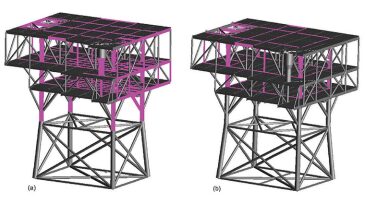
Applying sufficient passive fire protection (PFP) on topside structural-steel members is critical. Simplified and conservative approaches are available to estimate the extent and amount of PFP necessary.
-
Current methods for external inspection of floating assets on station use divers or remotely operated vehicles (ROVs), but these methods incur high safety, people-on-board (POB), and cost penalties. New methods to eliminate diving are being developed.