Testing page for app
-
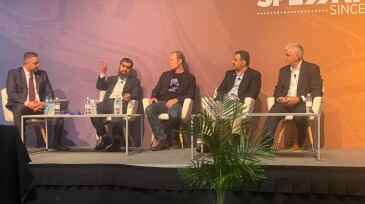
 Experts at SPE’s Annual Technical Conference and Exhibition say that despite AI’s great potential, it’s important to be realistic about AI’s capabilities and to remember that successful projects solve specific business problems.
 -
Data analytics practitioners in the industry have reexamined existing workflows and realized the substantial benefits that artificial intelligence brings, including increased efficiency and expedited turnaround times.
-
-
This update highlights efforts to electrify oil and gas assets and deliver clean energy to remote, underserved communities. But the big question remains: Can we really achieve net zero emissions by 2050?
-
Oil and gas leaders identified the upcoming US presidential election and economic uncertainty as significant drivers of their decision making for 2025.
-
Drilling longer wells, increasing the number of fracture stages, and completing multiple zones in complex stacked reservoirs, along with optimizing multilateral wells with sand control to enable long laterals in stacked reservoirs, have emerged as key focuses of the industry.
-
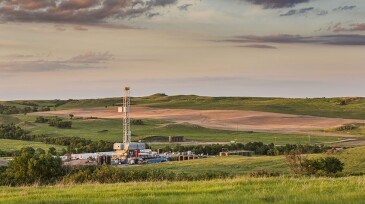
Over the past 75 years, drillers have gone from the Stone Age to the Space Age when it comes to technological improvements in well construction methods. Yesterday’s crude wood and iron drilling techniques have given way to today’s video game-inspired controls and robotic assistance—much of which migrated from offshore applications. These advancements have driven costs…
-
In this vodcast and column, Olivier Houzé explores the polarized views among SPE's members about the energy transition, highlighting the geographic and demographic differences. He examines historical perspectives on energy transitions, evaluates future scenarios, and discusses how SPE can adapt its mission to stay relevant.
-
This paper delves into the evolving landscape of drilling automation, emphasizing the imperative for these systems to go beyond novelty and deliver quantifiable financial value.
-
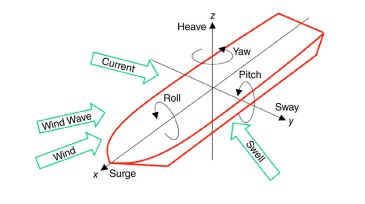
This paper describes a new application that leverages advanced machine-learning techniques in conjunction with metocean forecasts to predict vessel motions and thruster loads.