Testing page for app
-
 Concerns about the usage of water and chemicals and the environmental effect of large numbers of wells signaled the need for new thinking to address these concerns.
-
In the realm of enabling technologies, multiphase flow modeling has proven to be one of the most important to the oil and gas industry. Without it, nearly all subsea wells would be too costly or dangerous to develop.
-
Shale oil and gas wells use a lot of water in fracturing operations. Each well may use up to 8 million gallons, and as much as 35% of this can return as flowback water. Safe disposition is completely feasible and, in fact, is being broadly practiced today.
-
Expectations of continued USD 100/bbl of oil were shattered by a sharp price drop last year that eventually halved the prices of benchmark crudes. Prices were still sinking at the start of the year to lows not seen since 2009 due to a global oversupply of oil.
-
It is clear the oil and gas industry recognizes the large uncertainty in which it operates. A search in the OnePetro technical paper database using the keywords “uncertainty” or “risk” returns more than 53,000 conference and journal papers.
-
As is often said, all of the easy reserves already have been produced. Long gone are the days when low-risk, low-cost wells were drilled, completed, and put on production for a quick payout.
-
Saudi Aramco’s upstream strategy aims to implement the intelligent field concept in all of its upstream operations by 2016–2017 so it can better understand reservoirs and improve efficiency.
-
A sharp decline in oil prices is pushing oil and gas companies to innovate to increase efficiency and prepare to meet the world’s long-term energy needs, panelists said at the International Petroleum Technology Conference (IPTC) held in Kuala Lumpur, Malaysia, in December.
-
This paper describes the measures put in place so that the mooring system of the Gryphon Alpha FPSO could be replaced and reconnected on an efficient schedule.
-
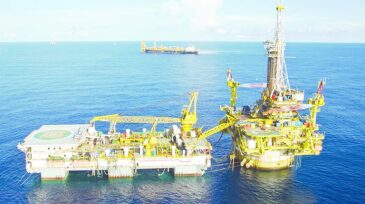
A deepwater field located offshore Sabah, east Malaysia, features a spar dry-tree unit (DTU) and multiple subsea-hub tiebacks to a floating production, storage, and offloading vessel (FPSO).