Testing page for app
-
 The subsea tieback is expected to start up in 2021. This is Shell’s second major development on a tieback in the US Gulf of Mexico, following Kaikias’ startup in May.
-
The strategy supports the Maximise Economic Recovery from UK Oil & Gas Strategy and Vision 2035, whose goal is to achieve £140 billion additional gross revenue from UKCS production by that time.
-
Worley gets the nod for commissioning and hook-up then hand-off to BP.
-
An SPE Forum held recently in The Hague, The Netherlands, brought together professionals from production and service companies, regulators, and stakeholders to discuss issues that are shaping the well plugging and abandonment sector.
-
In this paper, the authors discuss the characterization process for GR tools and how they behave in boreholes different from the one used in the University of Houston (UH) GR characterization pit.
-
This paper introduces a new core-analysis work flow for determining resistivity index (RI), formation factor (FF), and other petrophysical properties directly from an as-received (AR) set of core samples.
-
Formation evaluation drew special attention at the 2019 International Petroleum Technology Conference Education Week in Beijing, 24–28 March 2019. The student team that worked on Integrated Formation Evaluation for Resources Exploration and Reservoir Delineation won the first-place award.
-
The complete paper highlights elements of the technical development and an overview of the primary building blocks of the system, and presents in detail some of the challenges in developing, designing, and testing the control system.
-
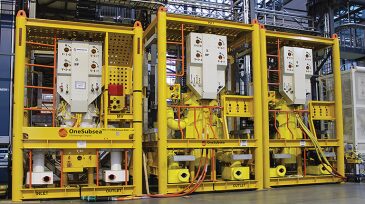
The first subsea multiphase boosting system was installed in 1994. Since then, it has grown into a technology with a global track record.
-
Alternative solutions to traditional subsea production systems received more attention when the oil price was low. During the past few years, more focus has been on how to use existing infrastructure to obtain more oil and gas from reservoirs than originally planned.