Testing page for app
-
 The authors detail the development of a technique based on surface-to-borehole controlled-source electromagnetics (CSEM), which exploits the large contrast in resistivity between injected water and oil to derive 3D resistivity distributions, proportional to saturations, in the reservoir.
-
This paper describes the drilling of high-pressure/high-temperature (HP/HT) deepwater wells through an ultranarrow pore-pressure fracture gradient (PPFG) window by means of technology application and strict procedural control.
-
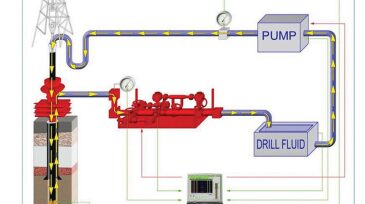
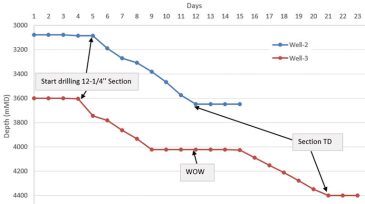
This paper discusses how managed-pressure-drilling (MPD) technology led to cost savings in two wells drilled in the Hai Thach gas field offshore southern Vietnam.
-
The performance of artificial-lift systems on horizontal wells is greatly influenced by both the volume of gas produced and the tendency for gas slugging.
-
Downhole annulus pressure is required for any gas lift design. This paper presents several methods of determining annulus pressure at depth and helps determine which method is most appropriate for specific conditions.
-
Of the many steps in the journey toward maximizing run life, the first steps should be to identify the system requirements and communicate those to the vendor. This can be challenging, because operators and suppliers often speak different languages. Fortunately, international standards can help.
-
In this paper, the authors describe a project to design, field trial, and qualify an alternative solution for real-time monitoring of the oil rim in carbonate reservoirs that overcomes these disadvantages.
-
This industry is one often considered reactive and overly tradition-bound. These new technologies, however—and, more importantly, the drive of these researchers to harness their capabilities—prove that petroleum engineers remain at the forefront of innovation and discovery.
-
Electrical-submersible-pump (ESP) technology is a proven artificial-lift method for shallow, low-pressure reservoirs such as those found in the West Sak viscous oil field in Alaska.
-
Women in PE make significant technical contributions and bring value-adding attributes and perspectives to the industry