Testing page for app
-
 With an uncertain future spawning from the Brexit referendum, the British government is seeking to maintain as much consistency in its energy policy as possible.
 -
As the boom of the 1970s and 1980s makes way for the first tranche of major decommissioning projects, the market for abandonment and decommissioning has grown over the past 5 years. To deliver these projects in a safe and economic way, decommissioning needs to be accepted as a serious challenge.
-
A new play in the Permian Basin is unconventional in an unexpected way: there is a small group of independents producing from a watery formation where oil production begins after they have pumped only water for weeks.
-
Mexico’s long awaited deepwater auction saw 8 out of 10 blocks awarded but there remains plenty of work to be done before activity ramps up, including finalizing regulatory rules, upgrading ports, and optimizing the bid rules for future auctions.
-
As drilling activity rises, the demand for all that is needed to complete wells rises even faster. The wells are bigger, and more water and sand are used for each foot stimulated.
-
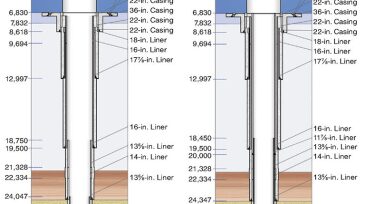
This paper focuses on cementing-design challenges and discusses the engineering techniques used to approach them.
-
Few locations present as many challenges for drilling as the Arctic. It is one of the most hostile environments in the world, with some of the most remote locations, the toughest logistics challenges, and the largest gaps in infrastructure on the planet.
-
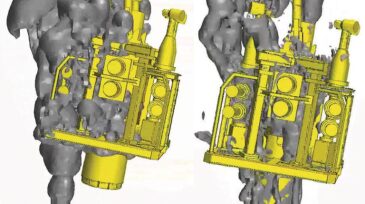
Developing a well-specific subsea-capping contingency plan involves assessing the feasibility of deploying a capping stack from a floating vessel, determining the weight and stability, and performing dynamic-flow simulations of closing the capping stack outlets.
-
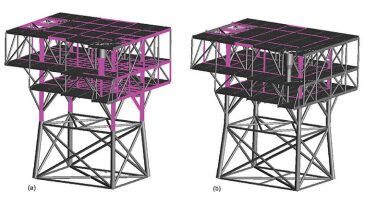
Applying sufficient passive fire protection (PFP) on topside structural-steel members is critical. Simplified and conservative approaches are available to estimate the extent and amount of PFP necessary.
-
Current methods for external inspection of floating assets on station use divers or remotely operated vehicles (ROVs), but these methods incur high safety, people-on-board (POB), and cost penalties. New methods to eliminate diving are being developed.