Testing page for app
-
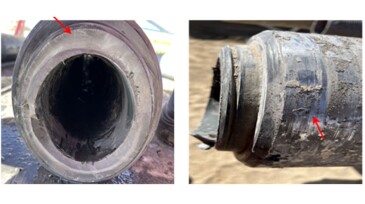
 This paper proposes a methodology for preventing drillstring fatigue and failure in deep wells with large shallow doglegs.
 -
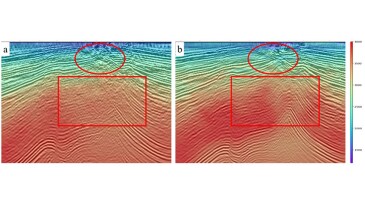
The authors of this paper present a novel joint-domain full waveform inversion framework optimizing travel-time accuracy in both data and model domains.
-
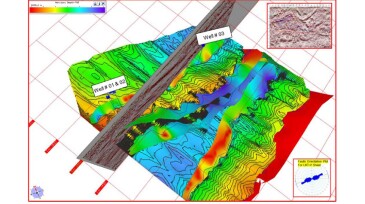
The main goal of this research work was to determine subseismic faults and fracture corridors and their characteristics, including density and orientation, for a Paleocene fractured carbonate reservoir.
-
SPE technical papers synopsized in each monthly issue of JPT are available for download for SPE members for 2 months. These January and February papers are available now.
-
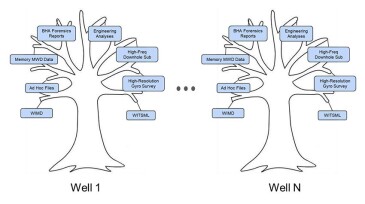
The authors make the case that data science captures value in well construction when data-analysis methods, such as machine learning, are underpinned by first principles derived from physics and engineering and supported by deep domain expertise.
-
The authors write that, by wireline formation testing of a sandstone formation adjacent to a sand/shale laminated reservoir in the Weizhou shale-oil region of the Beibu Gulf, key reservoir information can be directly obtained.
-
Everywhere you look these days, there is talk of how advances in big data, artificial intelligence, and machine learning will revolutionize virtually every aspect of our lives. This month, we will look at how researchers in the drilling domain are using this potential to improve well construction.
-
These papers provided insights and advances into field-operations automation, machine-learning-assisted petrophysical characterization, and fluid-distribution analysis in unconventional assets.
-
This paper presents a complete digital workflow applied to several greenfields in the Asia Pacific region that leads to successful deep-transient-testing operations initiated from intelligent planning that positively affected field-development decisions.
-
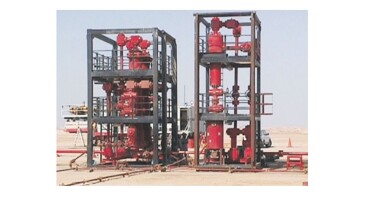
This study introduces a cleanup- and flowback-testing approach incorporating advanced solids-separation technology, a portable solution, equipment automation, improved metallurgy, and enhanced safety standards.