Testing page for app
-
-
 Achieving and sustaining performance drilling’s intended benefits—improved drilling efficiency with minimal downhole tool failures and the associated reductions in project cycle time and operational costs—requires new protocols in drilling-system analysis.
 -
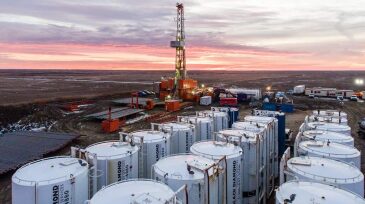
A Canadian company reports that it has drilled and completed a historic horizontal well in Saskatchewan.
-
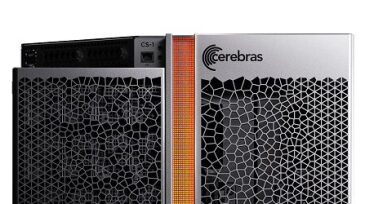
Startup Cerebras benchmarked its pint-sized computer against 16,000 Xeon cores in the Department of Energy's Joule supercomputer on a problem of computational fluid dynamics.
-
Oil and gas producers in Europe commit to reporting emissions, but major US firms do not.
-
Despite having strong wind resources and promising record-breaking capacity factors, most sites globally are unsuitable for bottom-fixed units. Floating wind will provide part of the solution for countries seeking to decarbonize their electricity.
-
Wind energy sources located offshore present challenges in transporting large amounts of energy. Energy transport through hydrogen molecules may be a solution. The PosHYdon project is intended to build experience with offshore H2 production and test power-to-gas technologies and integrated systems.
-
This paper’s intent is to provide a basic understanding of offshore renewable energy, including descriptions of wind and marine-hydrokinetic devices, with a focus on the physical and technical issues.
-
A system was designed to extend the offshore wind-energy concept from the power grid to a subsea field-development application. The system integrates a floating foundation with a wind-turbine generator, with all the required utilities hosted directly onboard the same floater.
-
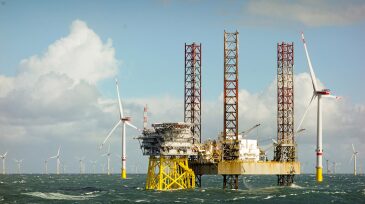
Offshore wind energy projects provide appealing options for the application of the skills and knowledge of practitioners involved in the design and fabrication of oil and gas facilities, especially those with offshore experience.