Testing page for app
-
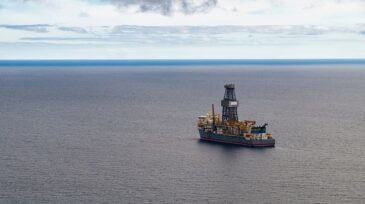
 Through the end of October, 38 rigs have been retired this year. Predicting future rig attrition is not an exact science, but certain metrics help identify those rigs.
 -
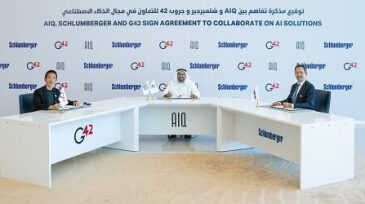
The agreement signed by Schlumberger, AIQ, and Group 42 is designed to develop and commercialize artificial intelligence for global exploration and production.
-
An ATCE presentation outlined how staged field development can help make smaller oil discoveries commercial alongside existing engineering solutions.
-
A Norwegian shipping company is eyeing smaller battery energy storage systems to design and develop greener heavy-lift jackups.
-
Modules for the FPSO will travel to Singapore for integration. The FPSO will be located offshore Mexico, with first oil production planned for 2021.
-
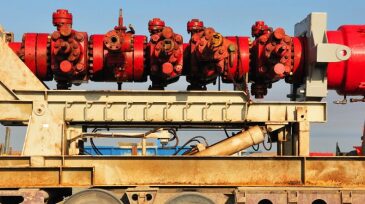
In 2013, a technology-development project began that digitized, automated, and applied analytics to blowout preventer pressure testing. As a result of the deployment of automated BOP testing, significant improvements have been achieved in process safety, personal safety, and rig-time savings.
-
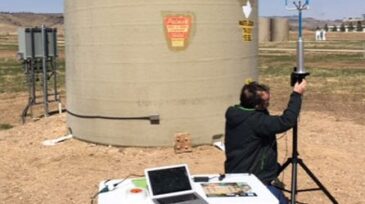
A new study confirms the success of a natural-gas leak-detection tool pioneered by Los Alamos National Laboratory scientists that uses sensors and machine learning to locate leak points at oil and gas fields, promising new automatic, affordable sampling across a vast natural gas infrastructure.
-
After a 3-year delay, the US has become the first nation in the world to formally withdraw from the Paris climate agreement.
-
An ATCE session focused on subsea and offshore subsurface applications with much wider implications. The discussion included the electrification of both facilities and subsurface systems, as well as more-extensive deployment of sensing and flow control from the surface to the reservoir.
-
As part of the agreement, Baker Hughes will accelerate the development of Compact Carbon Capture’s technology, aiming for global commercial deployment.