Testing page for app
-
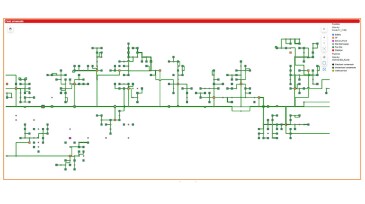
 This paper explains that the discovery of specific pressure trends, combined with an unconventional approach for analyzing gas compositional data, enables the detection and prediction of paraffin deposition at pad level and in the gathering system.
 -
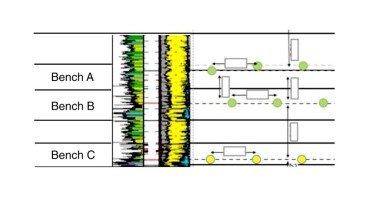
The aim of this study is to incorporate detailed geological, petrophysical, and hydraulic fracturing models to better predict and mitigate the effects of interbench interactions.
-
Outstanding papers over the past year have addressed topics such as casing deformation, well spacing, frac-design optimization, proppant transport in the well or in fractures, integrating diagnostics from field trials, and exploring the effects of lateral length on production.
-
This paper describes a study to design and implement an enhanced oil recovery project via huff ’n’ puff using Y-grade injectant.
-
The objective of this paper is to apply a developed workflow to determine the propped hydraulic fracture geometry in a horizontal multistage fractured well, incorporating production, pressure, and strain data.
-
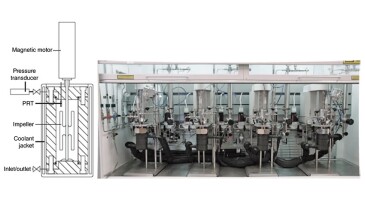
This paper presents an approach to subsea hydrate-risk management based on the understanding that some crudes have induction properties that delay hydrate formation even when the pressure and temperature conditions reach the hydrate thermodynamic region.
-
This study compares water-based chemicals including surfactants, nanoparticles, and ketones that can be used for enhancing the oil recovery of shale-oil reservoirs.
-
The advancement of flow-assurance technology can be characterized as a transition from reactive to proactive, from laboratory-scale examination to field applicability, and from data-driven to big data and physics integration.
-
Growing energy transition investment highlights oil and gas technologies as key enablers.
-
Our industry’s reputation won’t be rebuilt through campaigns—it will be rebuilt through conversation. This column explores how the “20/60/20 Rule” can guide us to focus on the majority who simply want to understand what we do and why facts alone aren’t enough to change minds.