Testing page for app
-
 Advances in space sensing allow direct measuring of gas flaring, opening a window into production trends.
 -
Since its publication in 2007, the SPE Petroleum Resources Management System (PRMS) has been broadly adopted by the petroleum industry as the international standard reference for reserves and resources classification and reporting.
-
If the industry until recently was lamenting that a global upstream investment slump caused a focus on incremental technology improvements, now a looming oil-supply shortage has reignited discussions about how innovation, digital technologies, and collaborations can accelerate future major projects.
-
Seven years ago, the International Energy Agency (IEA) issued a report on the prospects of natural gas titled, Are We Entering the Golden Age of Gas? The answer appears to be not yet.
-
Who decides what innovation is? Are we really innovating as an industry or merely applying a catchphrase to already tried and tested processes because that’s what’s “in?”
-
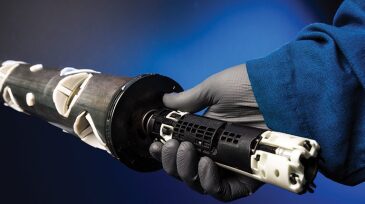
Accidental detonation of a perforating gun at surface can have catastrophic consequences. To decrease risks, layers of procedural controls have been implemented to reduce the inadvertent application of power caused by human error, stray voltage, or the presence of radio frequency (RF) energy.
-
Having blockchain on an oil rig means everyone on the job shares a view of a project from start to finish. This could facilitate innovations that cut costs, but organizational change is required.
-
Recipients of the 2018 SPE International Awards will be recognized at the Annual Reception and Banquet to be held during the 2018 SPE Annual Technical Conference and Exhibition in Dallas this month.
-
2019 SPE President Sami Alnuaim shares the main goals for his presidency, and thoughts on the role SPE can play in empowering members during the industry recovery.
-
This paper proposes a metric for quantifying drilling efficiency and drilling optimization that is computed by use of a Bayesian network.