Testing page for app
-
 As leaders in digital drilling analysis push into real-time data analysis and digital controls, they are finally confronting data-quality problems. Humans are better than machines at dealing with ambiguous readings.
 -
Sensor technology in the oil industry changes infrequently. Improvements in MEMS sensor technology are creating rapid momentum toward the use of tiny, rugged, and inexpensive sensors to replace larger, costlier, and more fragile legacy-technology sensors in directional drilling.
-
All eyes in the upstream continue to be on the growth in unconventional production, particularly in the US. But the offshore arena may be making a quiet comeback, at least in the near term.
-
Energy companies are looking to distributed ledger technology—otherwise known as blockchain—to help navigate the complex transactional systems that make up their operations. What is blockchain, and what makes it valuable to our industry?
-
Higher oil prices and higher-intensity completions are increasing the need for US onshore pressure pumping horsepower. Will still recovering pressure pumpers and equipment manufacturers be able to step up?
-
While the floating liquefied-natural-gas (FLNG) option initially looked promising, high capital expenditure and very high operational expense (OPEX) have limited its potential application, with four potential FLNG projects being canceled in Australasia in the last 2 years.
-
As the resources that the industry develops become increasingly challenging, access to a broader range of options and new and developing approaches allows more-efficient and -effective recovery.
-
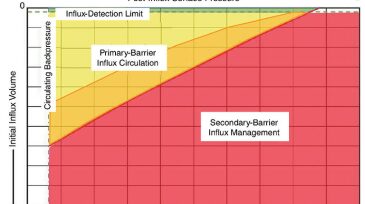
The influx-management-envelope (IME) concept is an advanced, innovative way to assess influx conditions in managed-pressure-drilling (MPD) operations, offering an improved tool for the decision-making process.
-
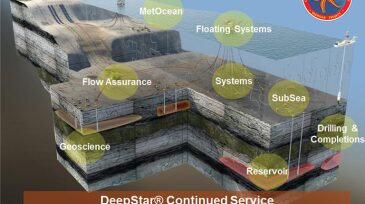
Offshore operators must grapple with ways to keep aging floating facilities on station beyond their original design life.
-
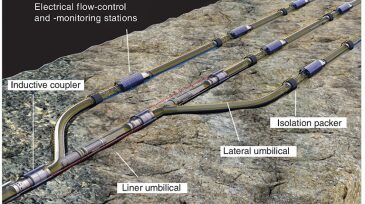
A producer and a service company have collaborated to develop a downhole system to merge multilateral technology and intelligent completions to create “smart laterals.”