Testing page for app
-
 Preferential engineering adds complexity and cost. The author's manifesto focuses on simple and elegant, combined with collaboration to meet future facilities needs.
 -
A recent webinar discussed the challenges the industry faces in adapting automated systems and the steps that operators should take to tackle the challenges.
-
This paper presents a technique that results in an occupied structure being located properly and constructed to reduce the risk of harm to the occupants to a tolerable level.
-
Improving safety culture is an important goal that can improve, and eventually eliminate HSE incidents in oil and gas.
-
Floating LNG (FLNG) units have a higher risk of explosion than onshore plants because of the limited and congested environment on the ship. This paper focuses on proper design to address this hazard.
-
“Decision Making: What Makes a Decision Good,” was the topic of a recent webinar held by the SPE Human Factors Technical Section.
-
The focus of this paper is how efficiencies affect schedule, with the recognition of the secondary effect on project cost. This paper also proposes integrated project delivery to enhance effectiveness.
-
Use of surfactants and gas lift in combination to suppress severe slugging were tested. Surfactants were able to suppress severe slugging for most of the cases, and gas lift helped significantly.
-
For years, the oil and gas industry has used autonomous underwater vehicles (AUVs) for simple tasks such as underwater surveys and inspection.
-
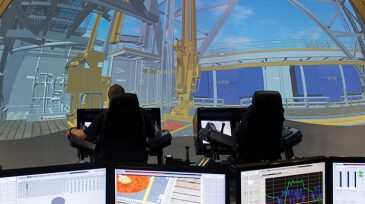
Researchers at the University of Texas at Austin (UT) have set an audacious goal to halve the time, cost, and number of rig personnel required for drilling every type of well, from unconventional shale to ultradeepwater.