Testing page for app
-
 The authors of this paper develop a model that can predict well-risk level and provide a method to convert associated failure risk of each element in the well envelope into a tangible value.
 -
This paper presents agile technologies that integrate data management, data-quality assessment, and predictive machine learning to maximize asset value using underused legacy core data.
-
Oil and gas operators around the globe are targeting reductions in offshore carbon emissions, and facilities electrification is the key that will help them meet their goals.
-
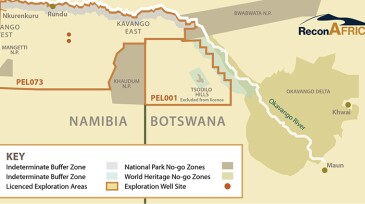
Results from third test well in the Kavango basin are being analyzed by the partners.
-
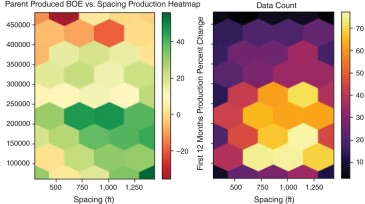
The authors write that child-well performance increases with spacing and decreases with infill timing and that the parent cumulative production at child-well completion is an effective indicator of child-well performance.
-
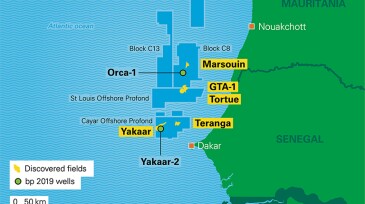
FPSO will feed gas from GTA development to nearby FLNG infrastructure.
-
This paper describes sand-control design and execution techniques applied to four high-rate gas wells in a deepwater environment.
-
The paper presents results of single-phase and multiphase electrical-submersible-pump tests as well as operation data, lessons learned, and failure examples gathered over 10 years of operation in a highly viscous offshore oilfield.
-
I would like to invite readers to review the selection of papers to get an idea of various applications in the upstream oil and gas space where ML methods have been used. The highlighted papers cover the use of transformer-based models to predict oil production, the use of data analytics to study parent/child well relationships in shale plays, and the use of convoluti…
-
Development duo is expected to add more than 12,000 B/D of oil production at peak.