Testing page for app
-
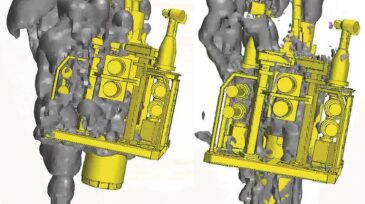
 Developing a well-specific subsea-capping contingency plan involves assessing the feasibility of deploying a capping stack from a floating vessel, determining the weight and stability, and performing dynamic-flow simulations of closing the capping stack outlets.
-
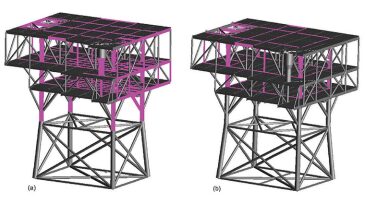
Applying sufficient passive fire protection (PFP) on topside structural-steel members is critical. Simplified and conservative approaches are available to estimate the extent and amount of PFP necessary.
-
Current methods for external inspection of floating assets on station use divers or remotely operated vehicles (ROVs), but these methods incur high safety, people-on-board (POB), and cost penalties. New methods to eliminate diving are being developed.
-
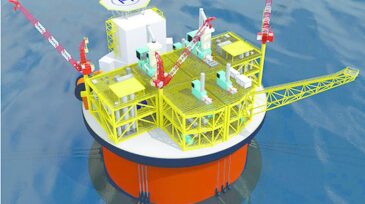
This paper describes a split-process FLNG design where primary production and gas-treatment functions are provided on a host platform while liquefaction occurs on a separate vessel.
-
Knowledge of the maximum- and minimum-permeability directions in anisotropic reservoirs helps to optimize injector and producer locations and is important for reservoir management, especially under secondary or enhanced recovery of hydrocarbons.
-
The application of high-precision downhole temperature sensors has resulted in pressure-transient analysis (PTA) being complemented or replaced by temperature-transient analysis (TTA).
-
This paper describes the method developed to achieve underbalanced drillstem testing (DST) in a deepwater field offshore India.
-
Understanding of formation damage is a key theme in a waterflood project. An integrated multidisciplinary approach is required to determine an optimal design and strategy.
-
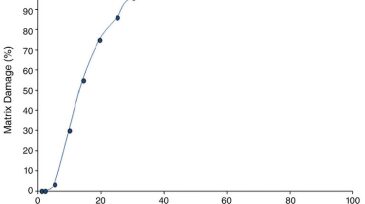
The paper describes a novel methodology to construct distributed formation damage across openhole wells in carbonate reservoirs and to evaluate the effects of damage on zonal productivity.
-
This paper summarizes a wide variety of sandstone-acid-stimulation case histories, highlighting aspects such as mechanical conditions and operational practices.