Testing page for app
-
 This paper presents results from the analysis of the effect of in-fill drilling on parent-well performance, and describes a simplistic approach to understanding the effect of the quest for operational efficiencies and economic cycles on development strategies.
-
Because the uncertainty analysis is complex and time consuming, in this paper, a stochastic representation of the computer model, called an emulator, was constructed to quantify the reduction in the parameter input space.
-
With the easy conventional oil in Argentina having been produced, one remaining way to find new oil in existing fields is to convert fields from primary or secondary production to secondary or tertiary production, respectively.
-
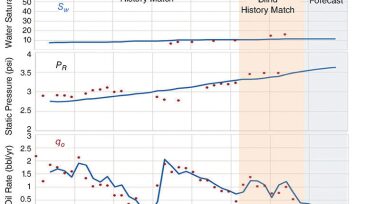
Young Technology Showcase—Top-Down Modeling: A Shift in Building Full-Field Models for Mature FieldsData-driven, or top-down, modeling uses machine learning and data mining to develop reservoir models based on measurements, rather than solutions of governing equations.
-
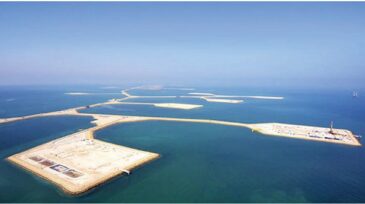
Saudi Aramco's Manifa field demonstrates that our industry can operate in harmony with the environment. Industry needs to minimize the impact of drilling and producing unconventional resources.
-
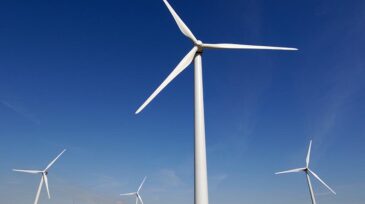
The renewable energy sector is showing strong global growth, especially wind and solar power, but oil shows no sign of losing market share in the global energy mix.
-
A new well intervention tool can solve annular isolation problems using a proprietary epoxy sealant placed at predefined locations, which can result in significant rig time savings. Field trial results are shared in this article.
-
Autonomous underwater vehicles (AUVs) have demonstrated their capabilities during the search for Malaysian Airlines flight 370 in the Indian Ocean.
-
Reservoir-simulation-model inputs are numerous, and uncertainty is pervasive—before, during, and after development. With the pressure to deliver results quickly, how do we find the right balance?
-
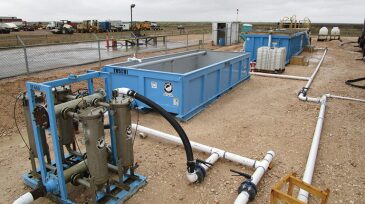
Tiny bubbles, called nanobubbles, are the focal point of a new innovation aimed at transforming produced water from a costly byproduct into a valuable asset.