Testing page for app
-
 The Offshore Technology Conference has announced the 2025 Spotlight on New Technology Award winners—nine game-changing innovations shaping the future of offshore energy. Join the celebration at 1600 CDT on Monday, 5 May, at the NRG Center, Houston.
 -
This article is the second in a Q&A series from the SPE Research and Development Technical Section focusing on emerging energy technologies. In this piece, Madhava Syamlal, CEO and founder of QubitSolve, discusses the present and future of quantum computing.
-
An SPE Distinguished Member, he died 17 March 2025. He was 77 years old.
-
Extended-reach drilling (ERD) and complex wells have emerged as pivotal techniques, enabling access to previously unreachable reserves. ERD allows operators to access oil and gas reservoirs far from the drilling site, minimizing the environmental footprint and optimizing resource recovery.
-
Cementing and zonal isolation remains an important topic to operators and service providers alike. Additionally, an increase in the number of papers with both academic and field-driven content shows that there is no lack of initiative for operators to materially improve on existing methods and technology.
-
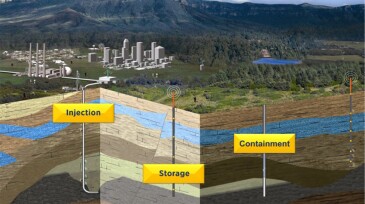
The 2025 update to SPE’s CO₂ Storage Resources Management System (SRMS) is now available. Following a 2-year review, the updated framework—endorsed by six professional societies—builds on the original 2017 system to support consistent classification, evaluation, and reporting of CO₂ storage resources. A key change in the 2025 SRMS Update is the inclusion of CO₂ EOR as…
-
Effective exploitation of deepwater assets, which often present extraordinary challenges, requires continuous flexibility, reflected in the approaches developed in these papers.
-
-
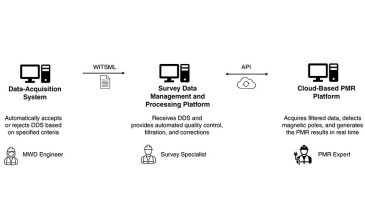
This paper presents a continuous passive magnetic ranging technique that can provide real-time distance and direction to the offset well while drilling without interrupting drilling operations.
-
The authors of this paper describe a project to develop a virtual sensor to monitor the cooling effect downstream of a subsea choke to avoid hydrate plugs during cold-start operations.