Testing page for app
-
 This year’s selection clearly shows where the interest lies in the economics, the Petroleum Resources Management System, and management decision-making.
 -
This paper describes the development of guidelines to determine the most suitable corrosion-resistant alloys for downhole injection equipment in wells for carbon capture and storage and carbon capture, use, and storage.
-
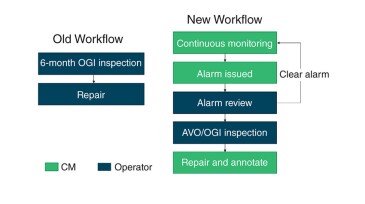
This paper examines how data-science-driven work practices can result in substantial reductions in methane emissions compared with other leak-detection and -repair methods.
-
The industry no longer considers the water as only a logistical problem. Now, it is a front-and-center component of any life-cycle planning.
-
This paper examines the economics of carbon capture, usage, and storage projects, either standalone or in conjunction with large offshore gas projects, in Denmark, Indonesia, and Australia.
-
The integration of the latest state-of-the-art technology in modeling and measurement of drilling dynamics and borehole quality has enhanced the understanding of bit, bottomhole assembly, and drillstring design. This can be seen in recent work on analysis of cutter-formation interaction, borehole-quality improvement, and modeling improvements.
-
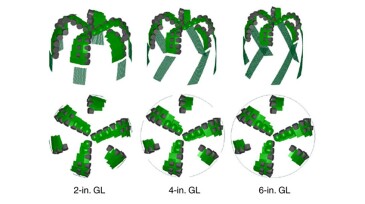
This paper describes a collaborative project to analyze affected wells, identify commonalities, and optimize bit design and drilling parameters to mitigate the effects of borehole spiraling.
-
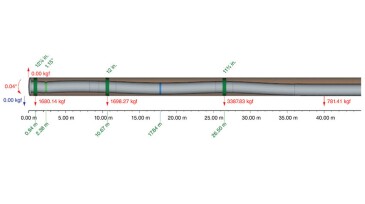
In this paper, bottomhole-assembly lateral behavior is analyzed using different types of computations, including static, dynamic, frequency-based, and time-based.
-
This month’s column offers an inside look at SPE’s governance, highlighting the Board of Directors and the selection process for its members. SPE President Olivier Houzé revisits lessons from the 2022 SPE-AAPG merger discussions and wraps up with actionable ideas to boost transparency and member engagement.
-
This section lists with regret SPE members who recently passed away.