Testing page for app
-
 The 2019 World Oil Outlook projects tight-oil supplies to rise to at least 75% of total US production before retreating.
-
Delfin Midstream announced advancements in partnership with Samsung Heavy Industries and Black & Veatch. By re-purposing existing offshore pipelines and building the FLNG vessels at Asian shipyards, the total capital costs are projected to be around $500–550/tpa.
-
Sensors, robots, and artificial intelligence have made their way into a number of areas within the industry, including pipeline inspections. Shell has begun to examine the innovative technologies that could shift the inspection paradigm.
-
Sparrows Group, an international specialist equipment and integrated engineering services company, has doubled the size of its operations in the UAE after securing contracts worth in excess of $70 million in the past 3 months. The awards have resulted in over 150 new positions being created in the region and includes scopes that accelerate the company’s expansion in t…
-
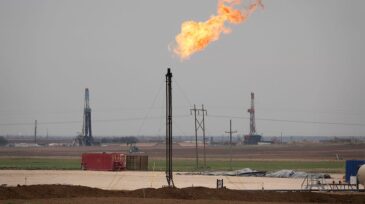
The volume of flared gas in the US unconventional sector is now 12% of the country’s total gas production. A pair of new reports say that Permian Basin operators account for much of the growth.
-
Chevron has seen great results from its implementation of learning teams, says Dave Payne, the company’s vice president of health, environment, and safety.
-
The US major has had a stake in the field since it started production in 1997. It produced 584,000 B/D of oil last year.
-
SponsoredMany oilfield applications involve use of slurries. But sedimentation of the additives that started out as powders can create problems and reduce effectiveness. A new easy to use, liquid polymer additive from BYK is the solution you need.
-
In this video from Bloomberg, Eldar Saetre, chief executive officer and president of Equinor, talks about the company's increased push into the offshore wind power market.
-
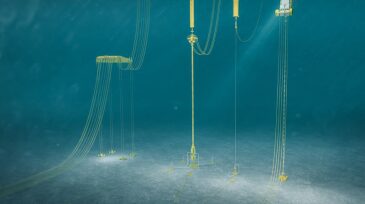
Nonmetallic, thermoplastic composite pipe (TCP) technology can now be found in every oil and gas region globally and can operate at pressures of up to 12,500 psi, and in water depths as low as 3000 m. The focus is now on developing and deploying TCP risers for extreme environments.