Testing page for app
-
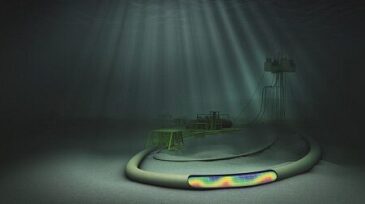
 Future offshore oil and gas fields are likely to be satellite developments that emit less greenhouse gas because they do not require new production platforms. A new computational tool is now enabling the design of longer pipelines that will allow many more fields to be developed as satellites.
 -
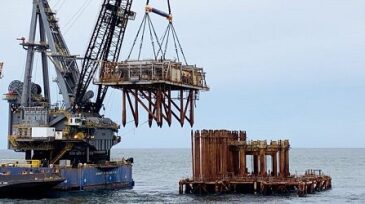
The Bureau of Safety and Environmental Enforcement approved the conversion of the Lena compliant tower platform into an artificial reef under the bureau’s Rigs to Reefs program.
-
Shell has selected Bentley Systems, a provider of software and digital twin cloud services, to help streamline its capital projects and decrease time to first oil.
-
Marking the end of a 2-year existence, Riviera is preparing for liquidation and dissolution. The sale of its upstream and midstream assets for $146 million will deliver a $1.35-per-share cash dividend to shareholders. By the end of this year, the company will cease to exist.
-
ConocoPhillips promised more than just growth and costs savings when it announced a deal to acquire Concho.
-
To drive progress in the field of data science, the authors propose 10 challenge areas for the research community to pursue. Because data science is broad, with methods drawing from computer science, statistics, and other disciplines, these challenge areas speak to the breadth of issues.
-
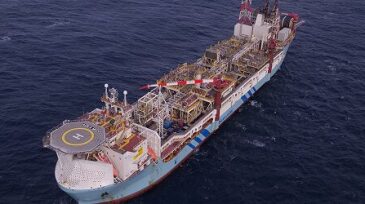
DNV GL and floating production, storage, and offloading (FPSO) vessel specialist Bluewater are undertaking a pilot project to use hybrid digital twin technology to predict and analyze fatigue in the hull of an FPSO in the North Sea.
-
The newly launched video series featuring speaker Bob Chin, the creator and editor of the OGF Savvy Separator Series of articles, provides a basic level of understanding of separator design and troubleshooting.
-
The LNG project includes development of offshore gas fields in Mozambique’s Area 1 and a liquefaction plant with a capacity in excess of 12 mtpa. The gas turbines are slated for delivery in 2H 2021 and 1H 2022, and the compressors are expected in 2021.
-
FLITE Material Sciences says that its unique lasering process can be used on just about any type of material to make it either repel or attract water and oil. For an industry that deals with a lot of both, the technology has many potential use cases.