Testing page for app
-
 No company or organization could have predicted our industry would be facing a viral pandemic, coupled with oil prices at their lowest levels in almost 2 decades. This is a time to put our heads together and come up with a new plan. This is what oil and gas does best.
 -
Drilling still depends on human judgment to solve many problems. Some of the problems are big, and others are related to niggling details. This article discusses three innovations aimed at improving the data flows.
-
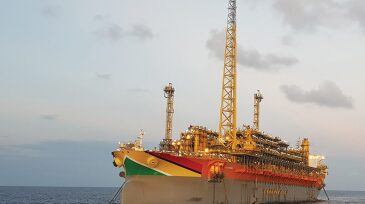
Putting together the billions of dollars needed to develop deepwater finds has become tougher, but when the discoveries are huge, companies will make every effort to find a way to tap what may be a cheap source of oil.
-
For the offshore sector, the collapse in oil demand and prices came just as the market was beginning to look up. Now many companies are focused on survival. This article discusses how various market segments, regions, and companies are faring in “the new reality.”
-
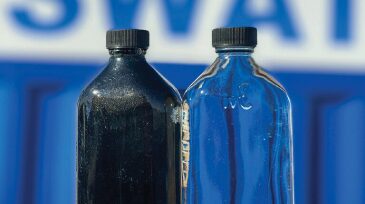
Researchers use novel methodology to measure the thermo-electric properties of native crude.
-
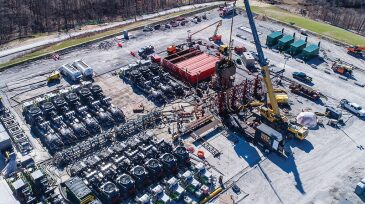
Faster drilling speeds have become one of the major obsessions of the shale sector in recent years. But since completions represent up to 70% of a new well’s cost, maybe this side of the business needs more attention now.
-
The room for error and cost overruns just got a lot smaller with the escalating need to make operations more efficient and leaner with fewer resources and investors continuing to prioritize ESG alongside profitability.
-
Prophets of doom have argued that there will be no cyclical upturn this time, that conventional offshore oil and gas developments, with the odd exception, have been squeezed out of the cost curve by the rise of tight oil. Yet there are signs of recovery that might breathe life back into the sector.
-
The single independent riser (SIR) is a hybrid riser configuration optimized for ultradeepwater field development. The SIR is composed of a flexible jumper and a rigid part vertically tensioned by means of distributed or continuous buoyancy.
-
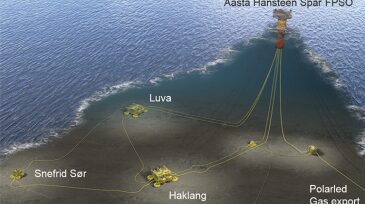
The complete paper describes the overall project execution of the Aasta Hansteen field development on the Norwegian Continental Shelf (NCS) north of the Arctic Circle. It is the deepest field yet developed on the NCS in 1300 m of water.