Testing page for app
-
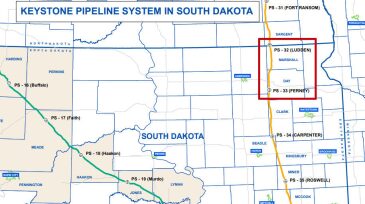
 Weights used in the original construction of TransCanada’s Keystone Pipeline in South Dakota were identified as a preliminary cause of the failure that resulted in a 210,000-gal spill in November.
-
Akastor ASA appointed Karl Erik Kjelstad CEO effective from 1 January. Kjelstad succeeded Kristian Røkke who became the chief investment officer of Aker ASA on 1 January. Kjelstad has been EVP and investment director at Akastor since its establishment in 2014. He joined the Aker group in 1998 and has held executive positions throughout the group, including EVP of Aker…
-
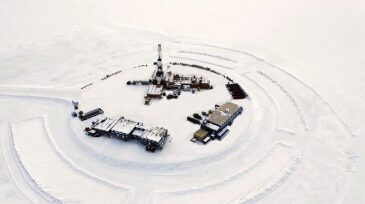
Major oil discoveries by Armstrong Oil & Gas and ConocoPhillips have compelled the US Department of the Interior to reassess its estimate of undiscovered, technically recoverable resources in parts of Alaska.
-
Schlumberger and Weatherford called off a joint venture, with Schlumberger buying Weatherford’s US fracturing assets outright.
-
Kotug, a Rotterdam-based marine services company involved with projects such as Shell’s Prelude FLNG and the decommissioning of the Brent Delta topsides, has applied for a patent to use drone technology in its tug operations.
-
The American Institute of Mining, Metallurgical, and Petroleum Engineers (AIME) has released a report titled, “In Pursuit of Technological Innovation,” that outlines the goals and initial analysis of the AIME Council of Excellence.
-
In this issue, SPE’s technical directors evaluate the current state of the upstream oil and gas industry and offer their outlook for what will drive the sector in 2018.
-
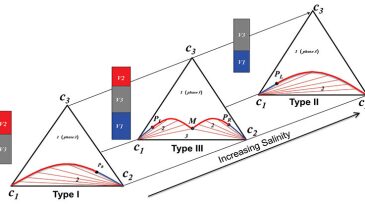
Progress in chemical EOR, from polymer to alkaline/surfactant/polymer, has been significant. Not only are there new chemicals with improved recovery capabilities, but also the cost of the chemicals is being reduced continuously. All those factors led to more operators using chemical EOR.
-
The complete paper presents a new three-phase relative permeability model for use in chemical-flooding simulators.
-
In the complete paper, three stages of review have been combined to find out the applicability of the most-feasible improved-oil-recovery (IOR) methods in North American unconventional reservoirs.